The Lighthouse
Rotterdam
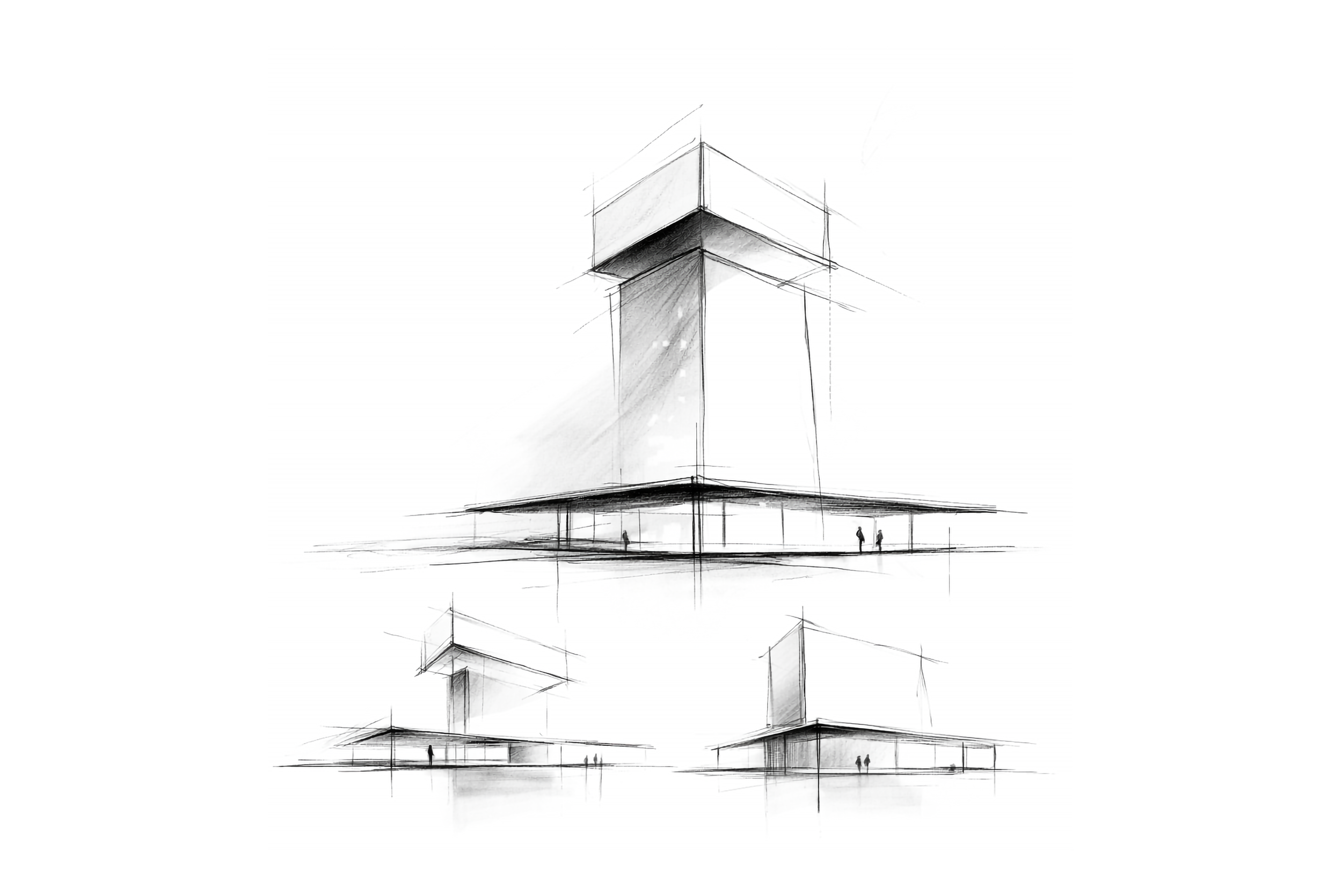
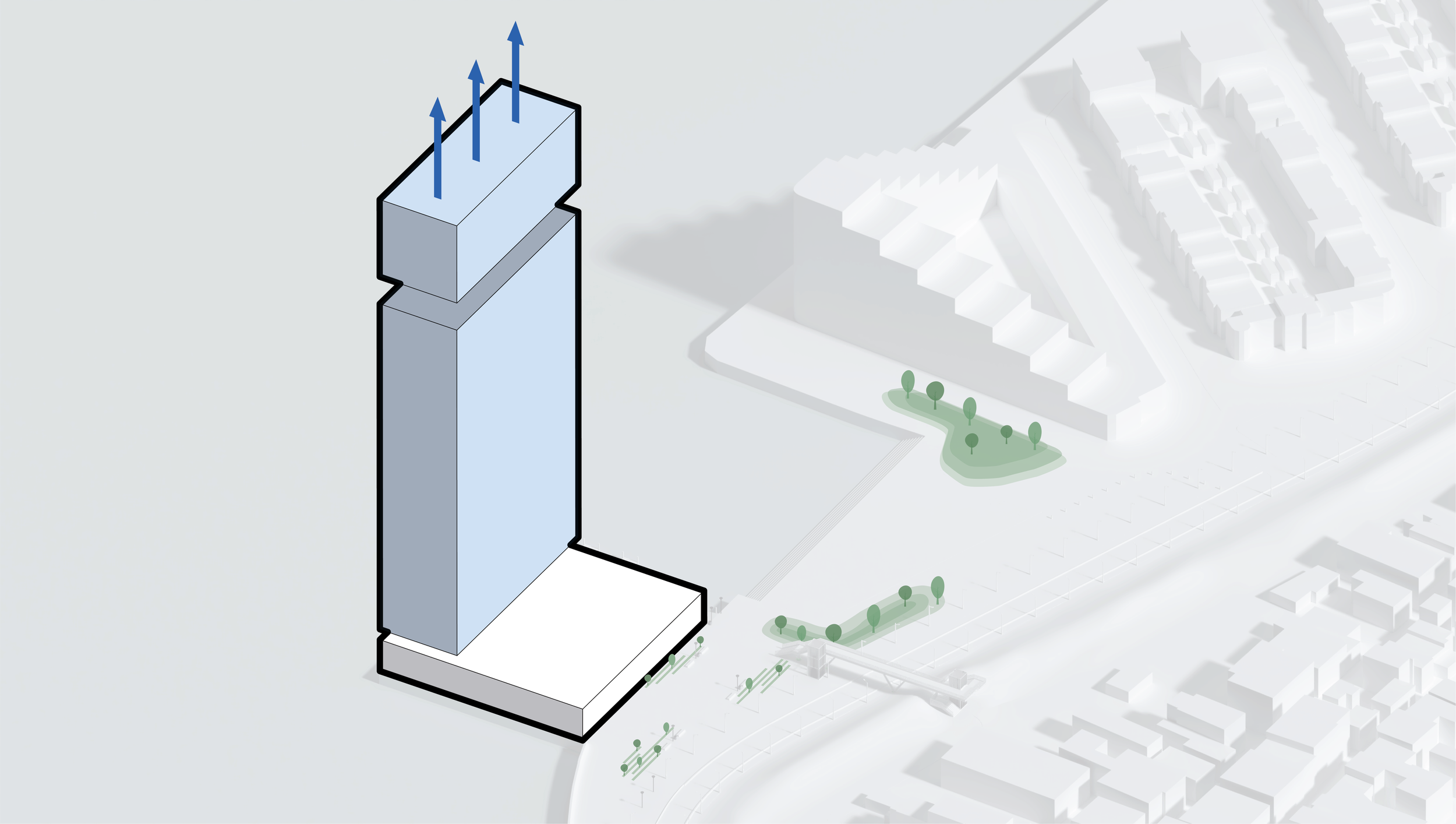
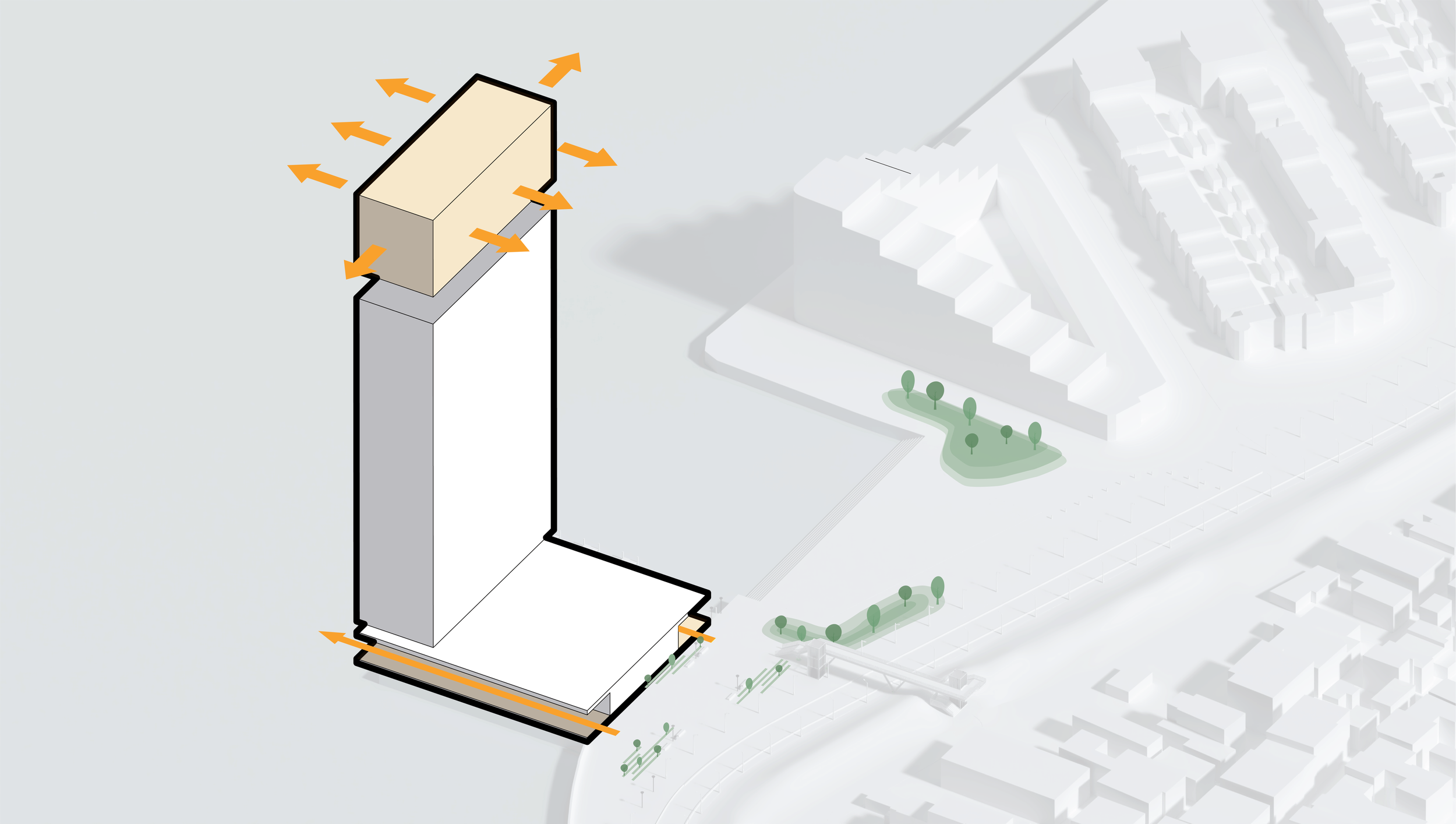
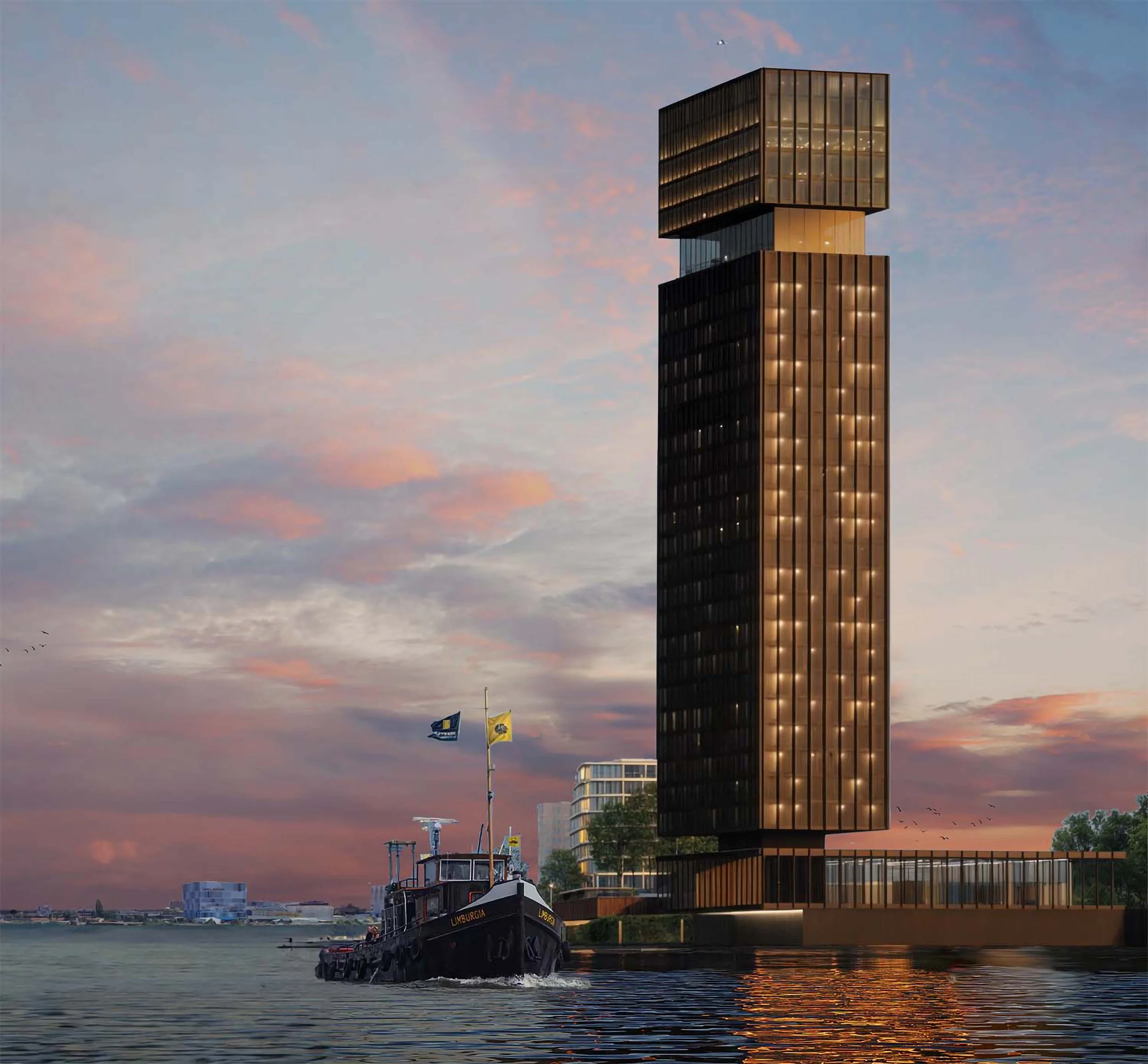
The Lighthouse is conceived as a contemporary urban landmark that strengthens the relationship between architecture, water, and public life. Developed within the broader vision of reactivating Rotterdam’s waterfront and supporting urban regeneration, the project combines residential, public, and commercial programs within a single iconic vertical structure. The design explores the idea of a luminous tower emerging from an open and permeable podium, creating strong visual and physical connections with the surrounding landscape and river. Through a clear volumetric composition and a strong attention to urban context, the project aims to establish a new social anchor for the neighborhood, offering vibrant communal spaces, panoramic views, and a renewed identity for the waterfront.
the beacon
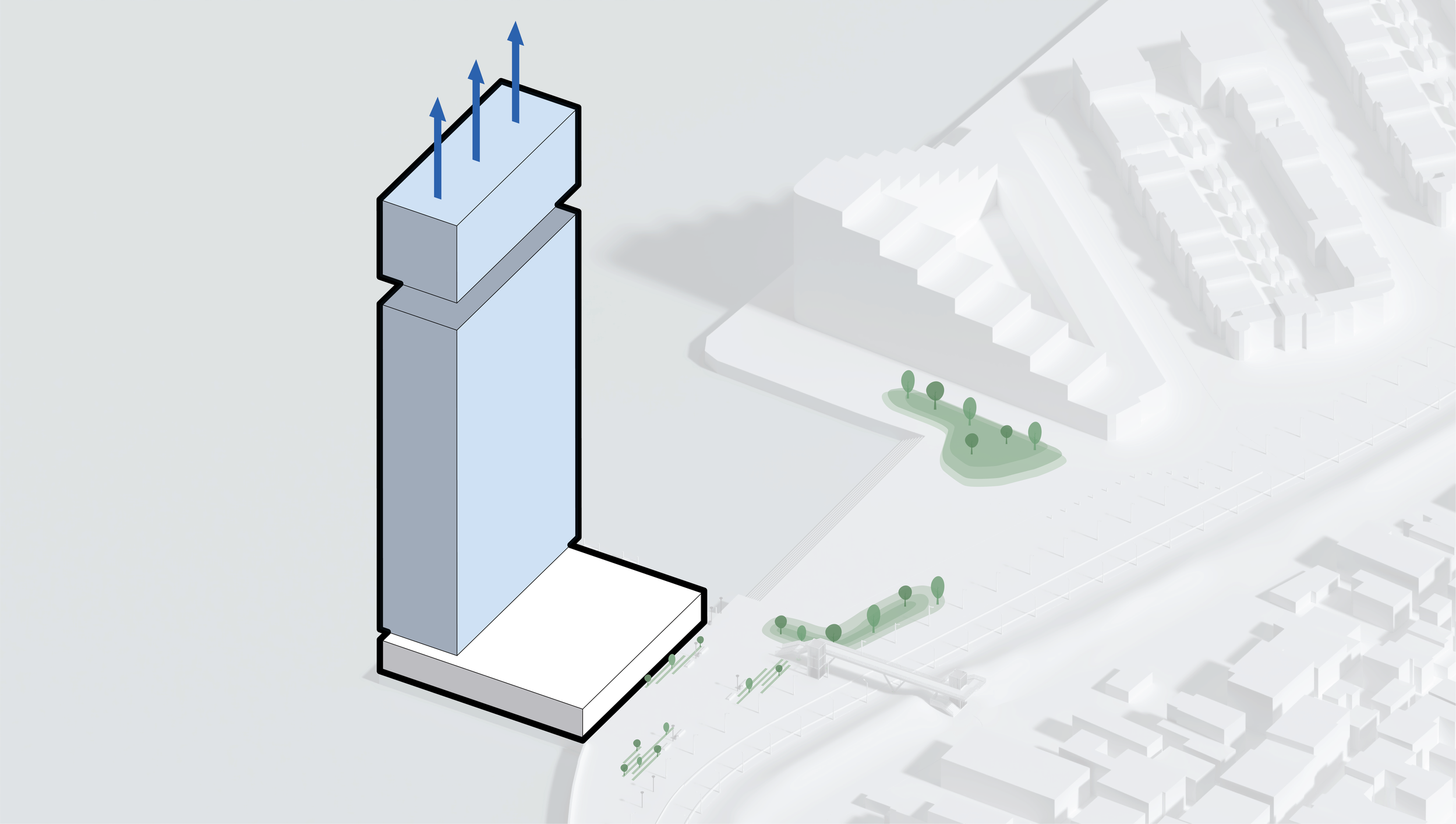
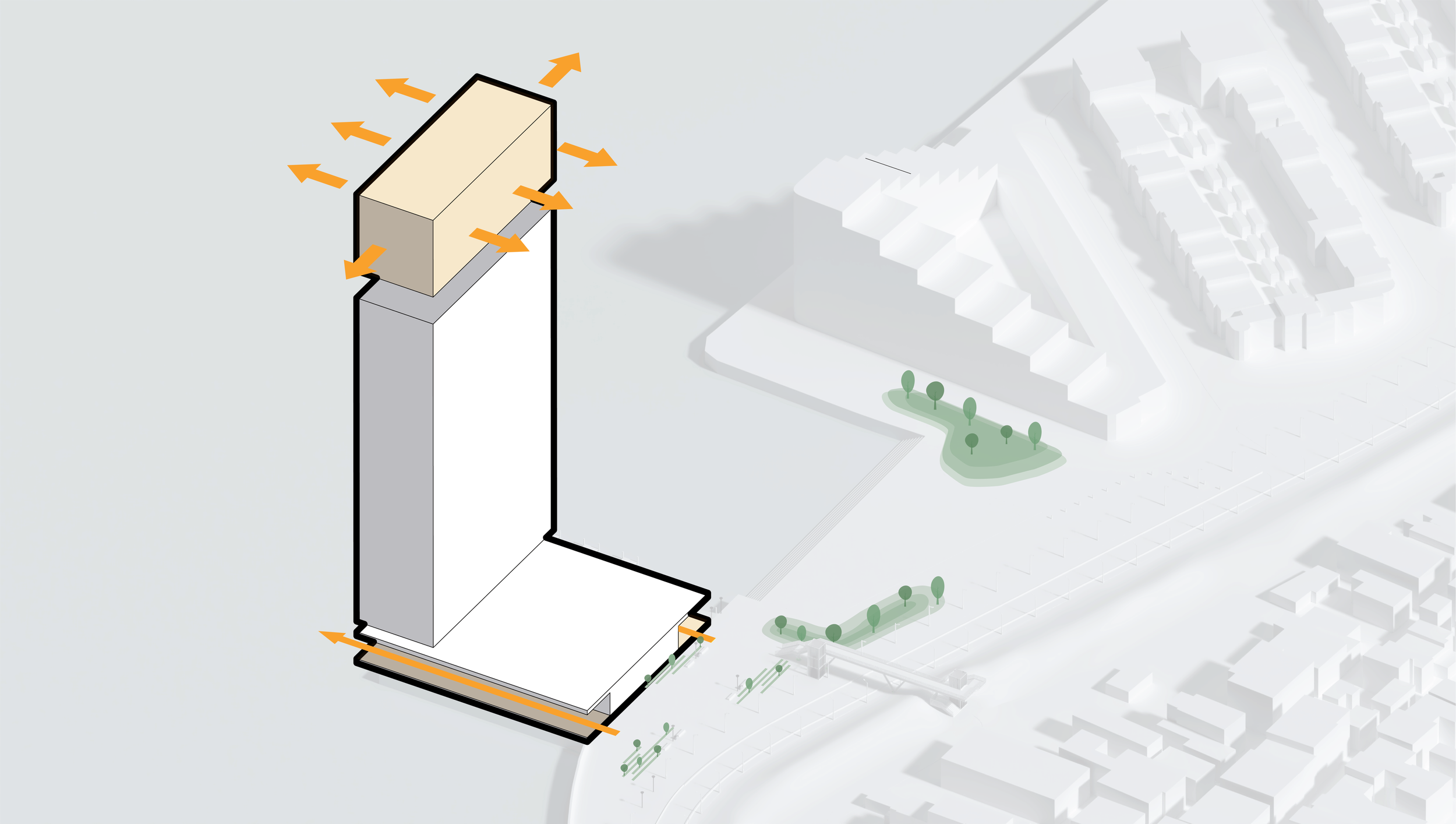
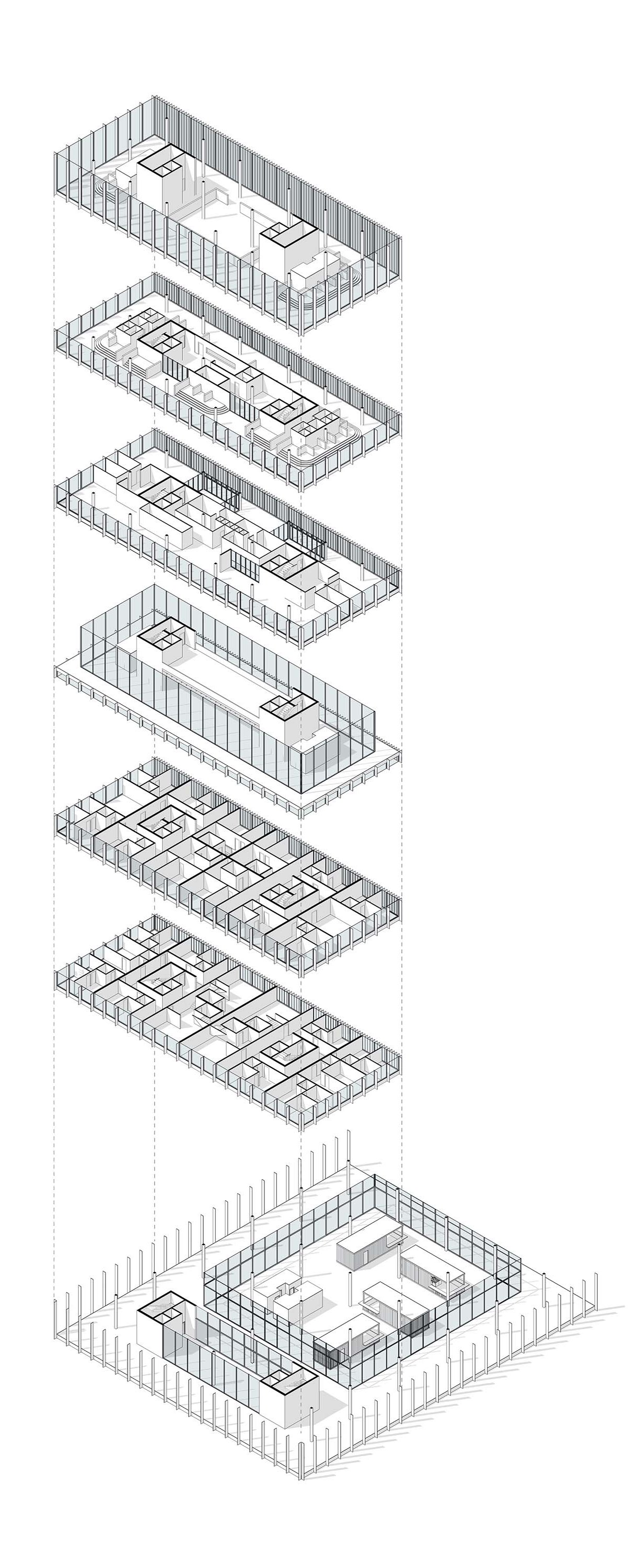
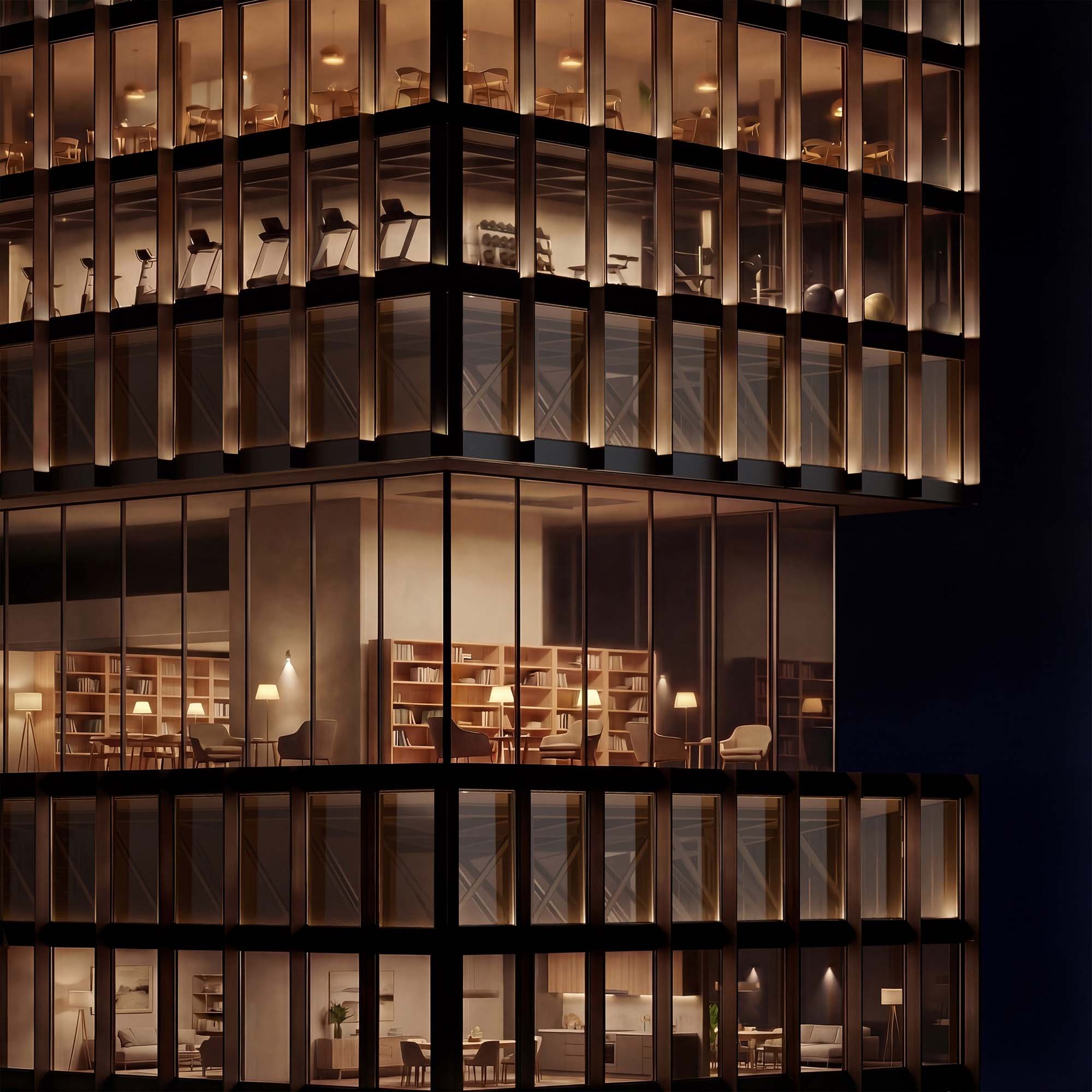
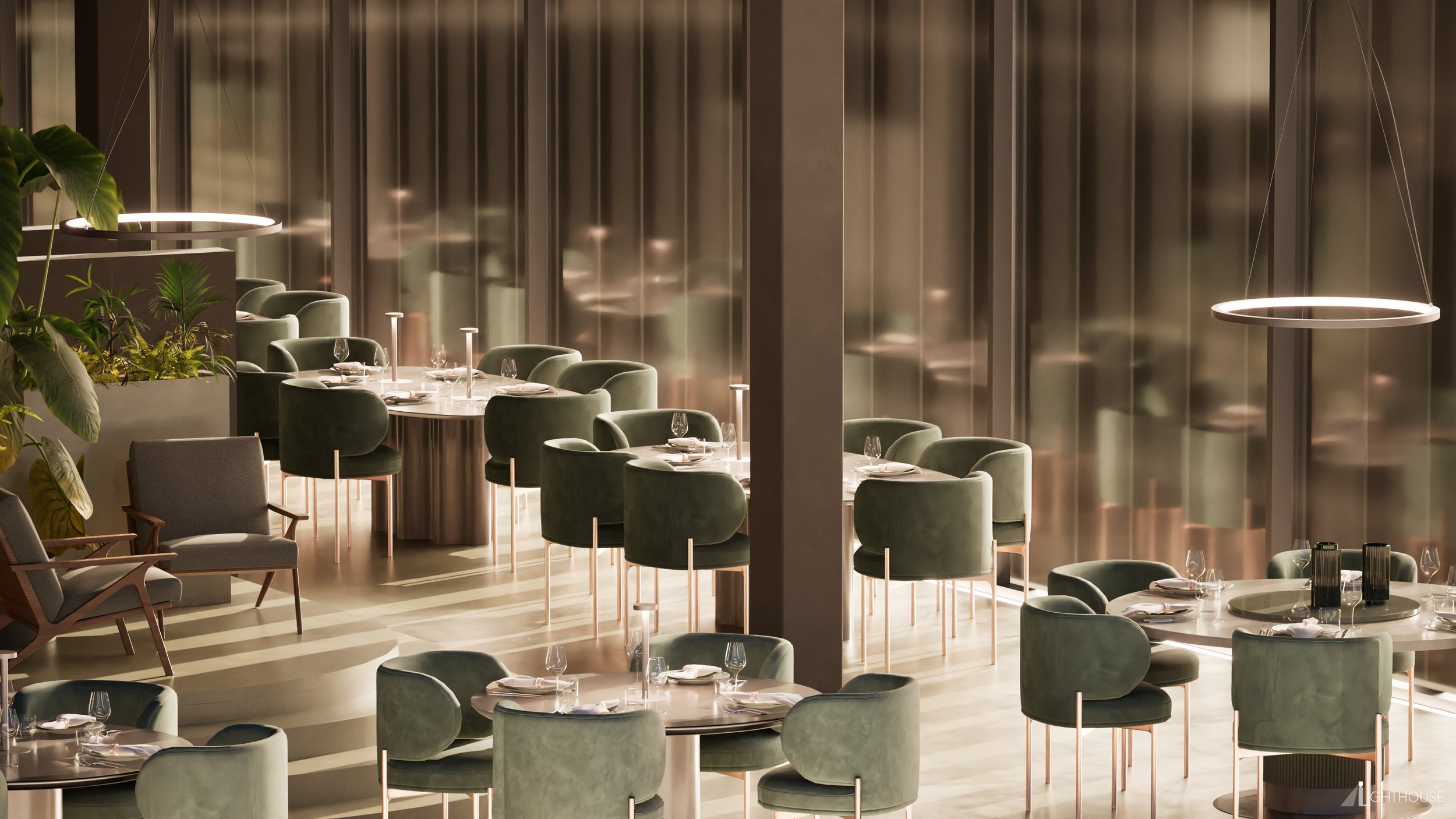
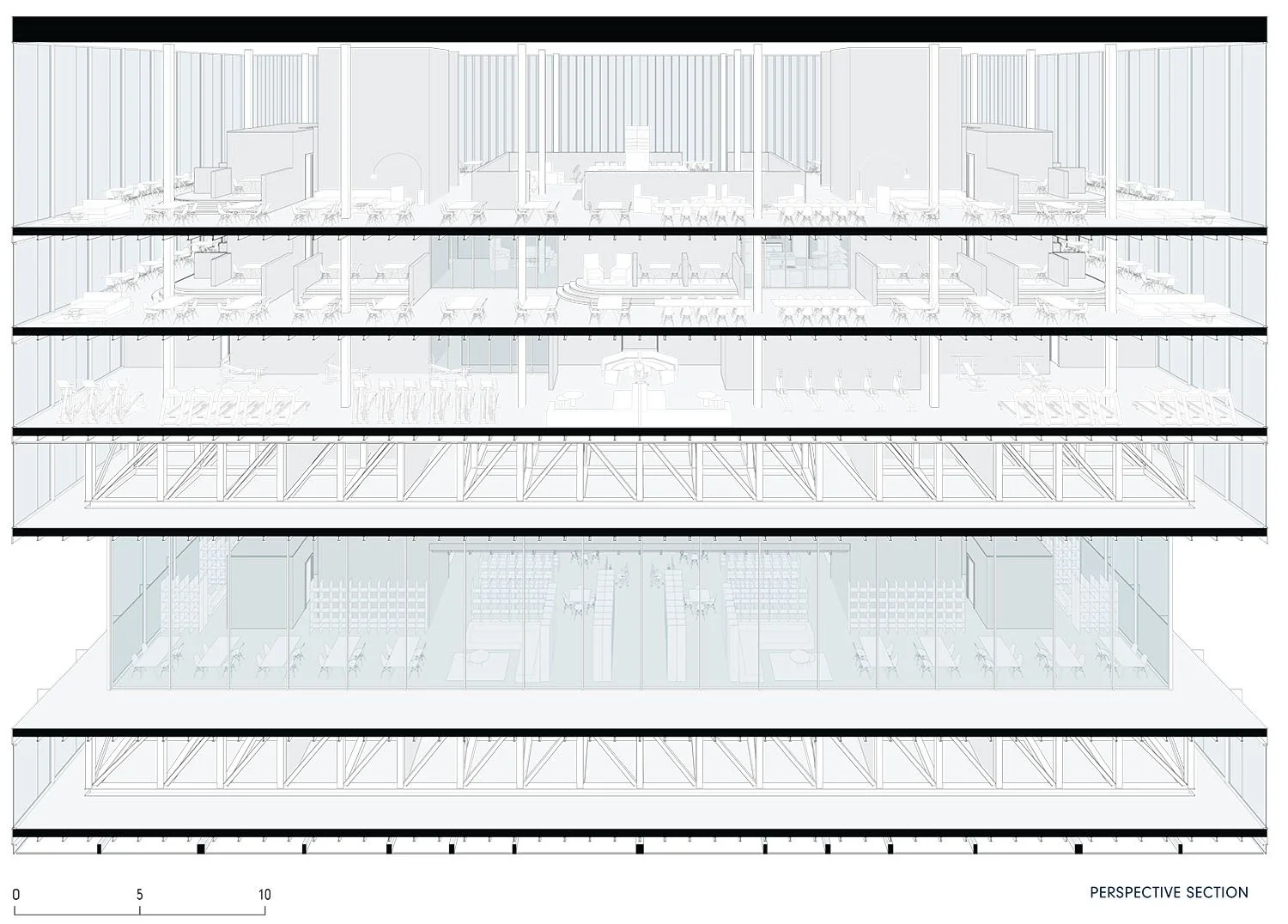
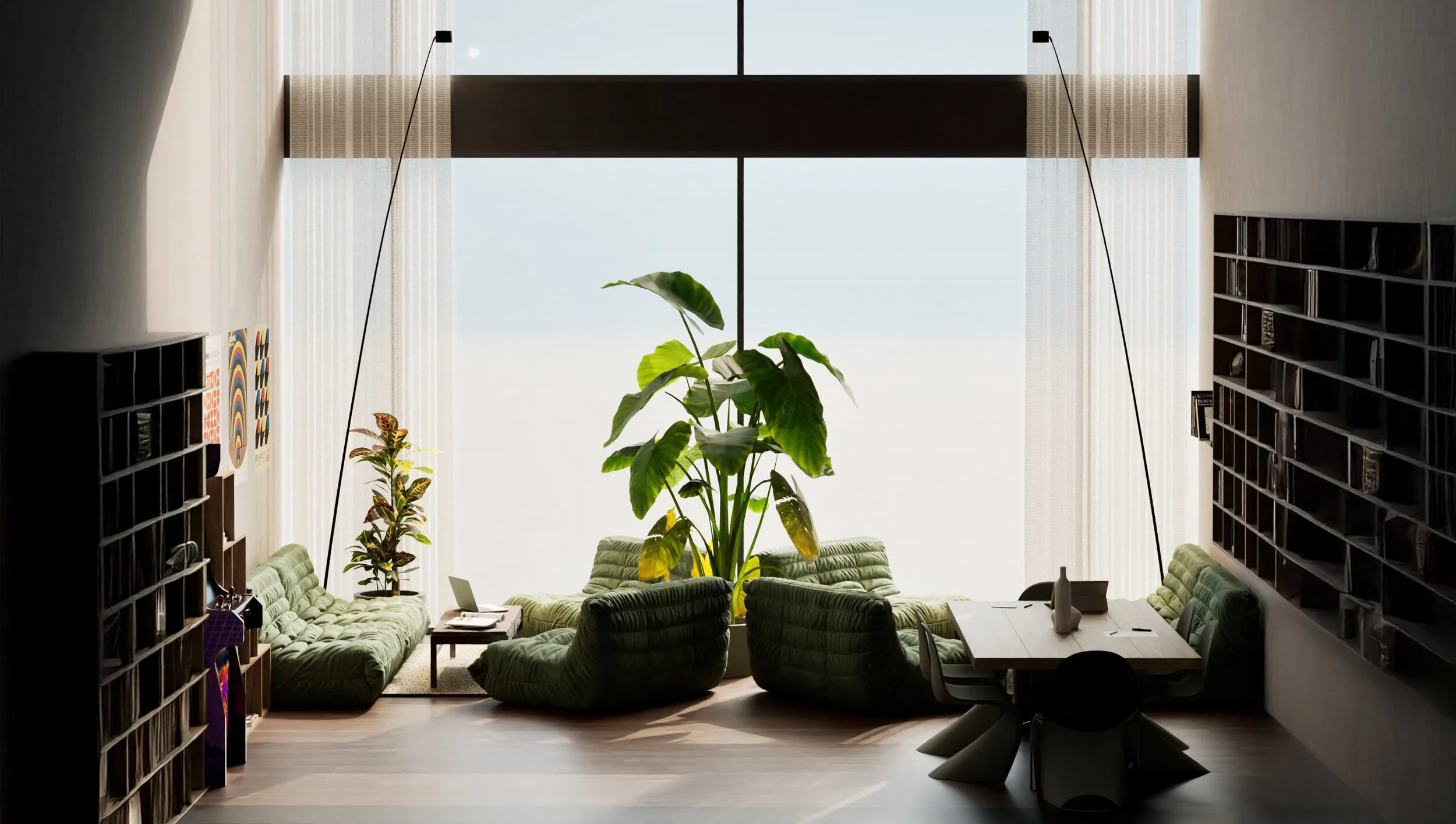
The upper floors of the tower are conceived as a vertical sequence of shared and public spaces that transform the building into an active social destination beyond its residential function. Acting as a transition between the living areas and the rooftop, a double-height library with mezzanine introduces a calm and luminous environment, offering panoramic views and spaces for study, reading, and informal gathering. Above, a fully equipped gym extends this collective experience, pairing wellness activities with expansive city and river vistas to enhance the daily life of users. The program culminates with a restaurant and the rooftop skybar, designed as the symbolic “lantern” of the tower. Elevated above the urban fabric, these spaces become a vibrant destination open to both residents and visitors, reinforcing the building’s identity as a landmark while activating the skyline with light and public life, especially during the evening hours.
residences
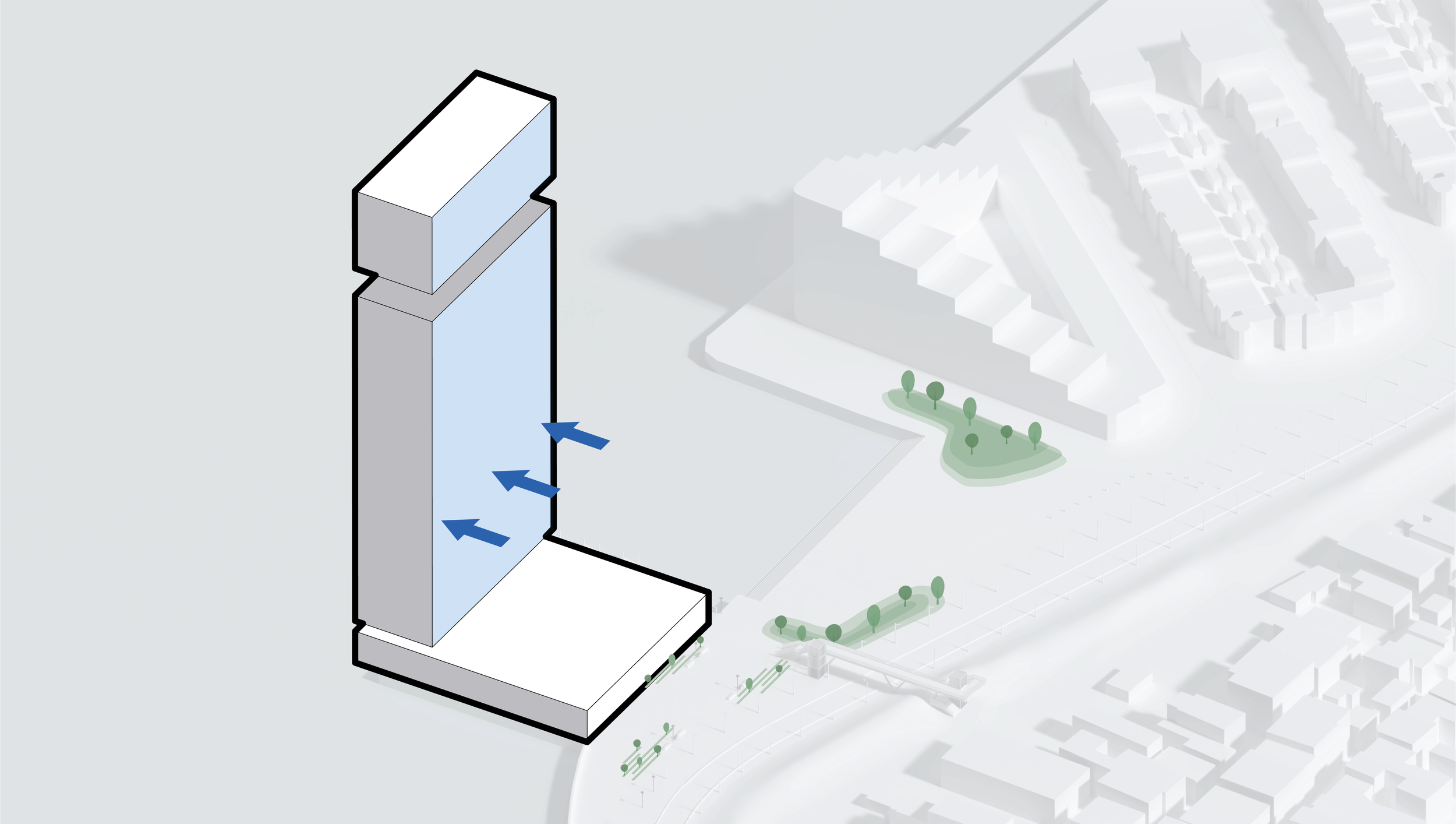
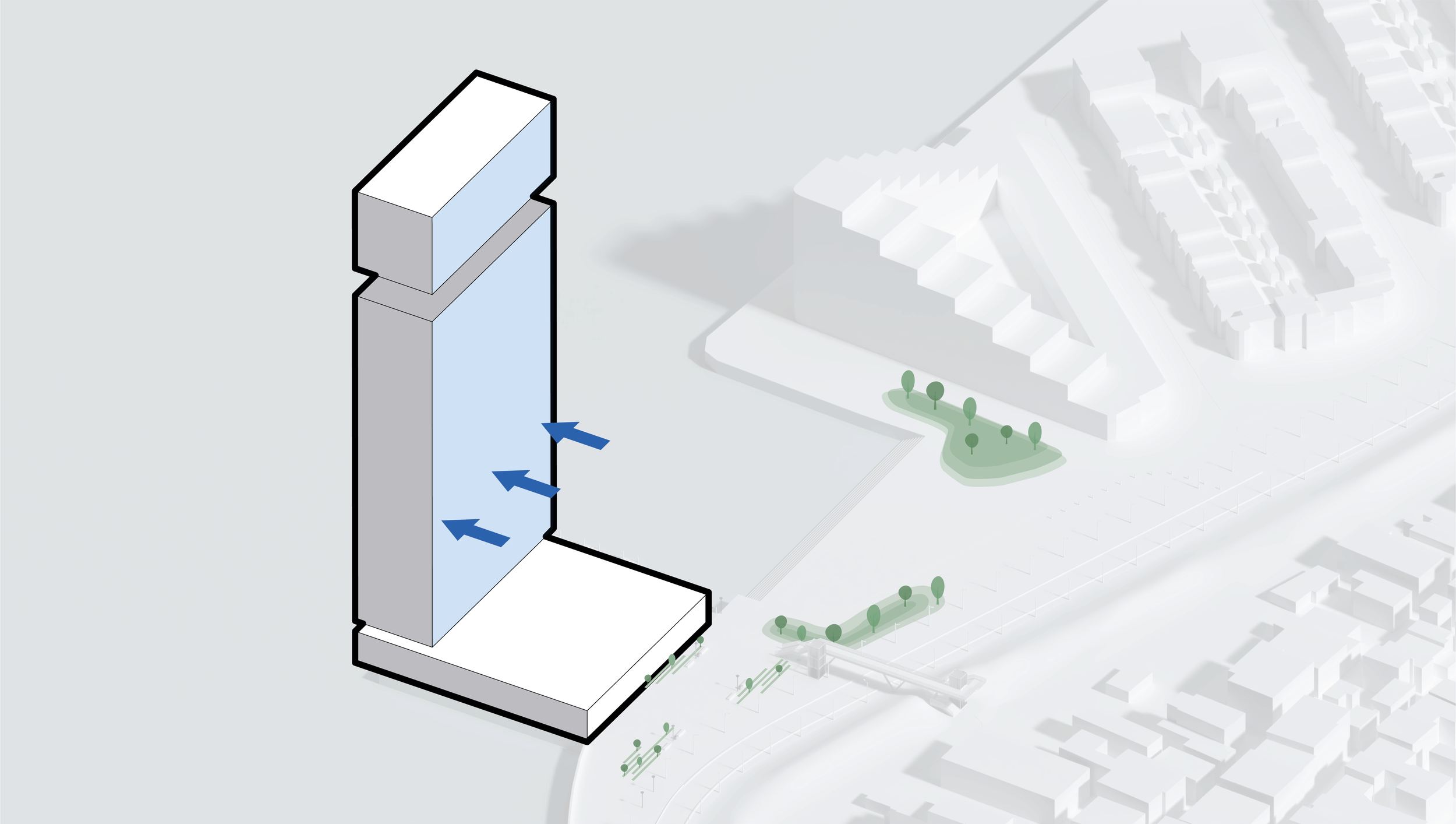
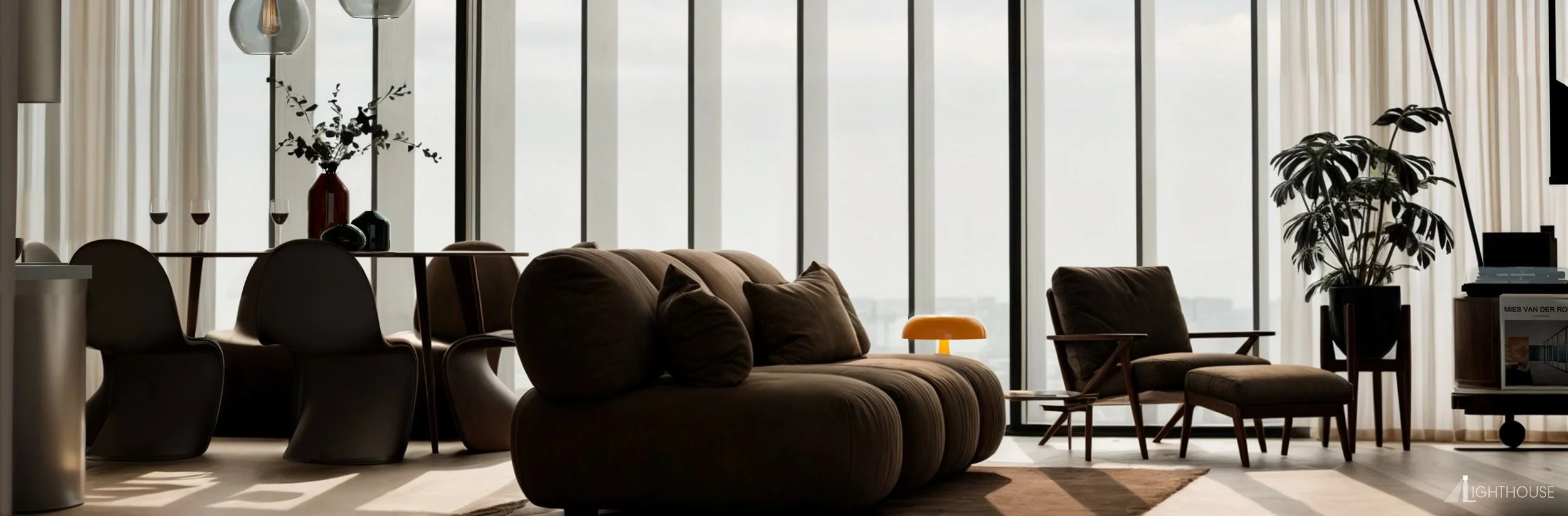
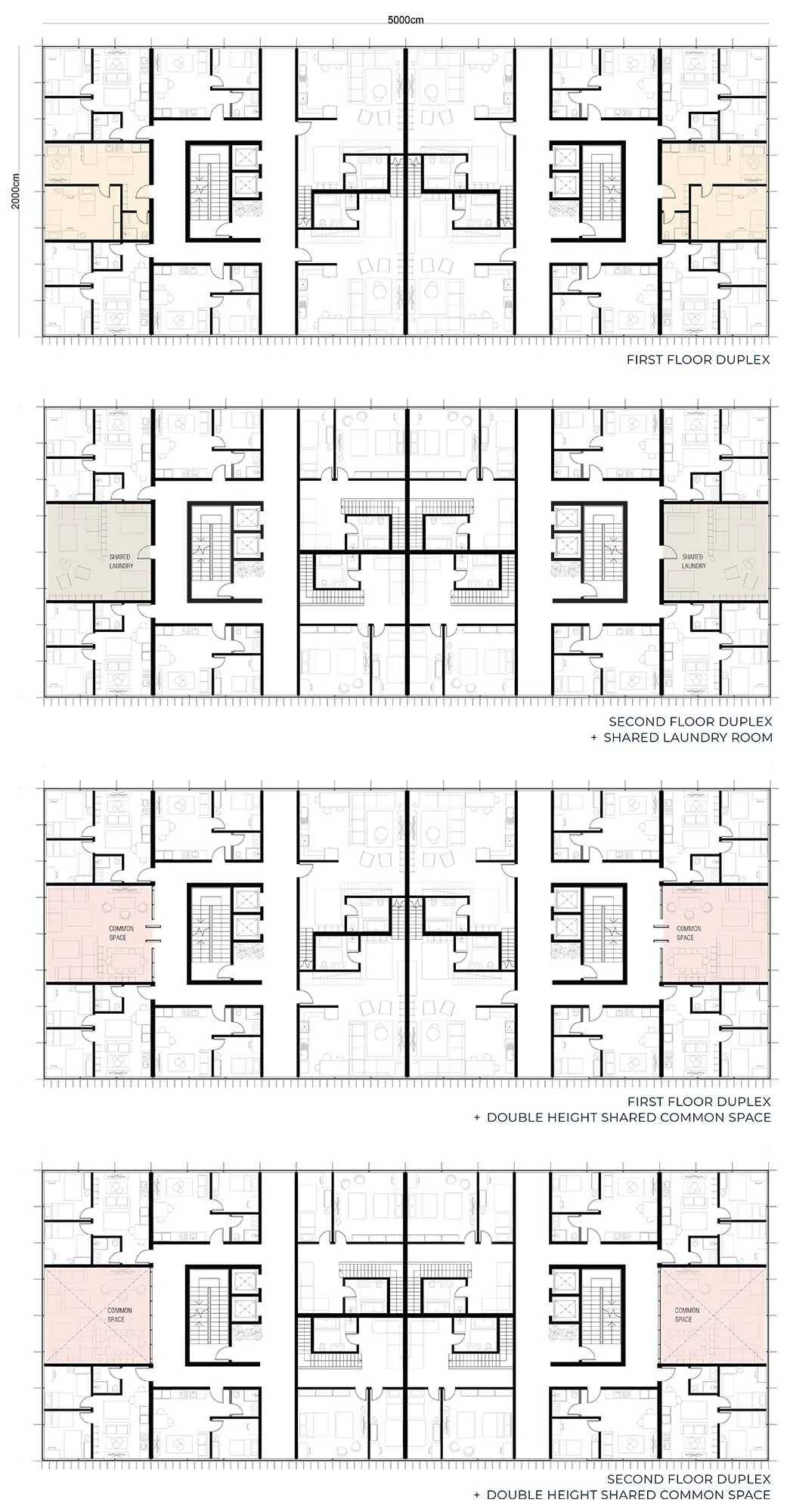
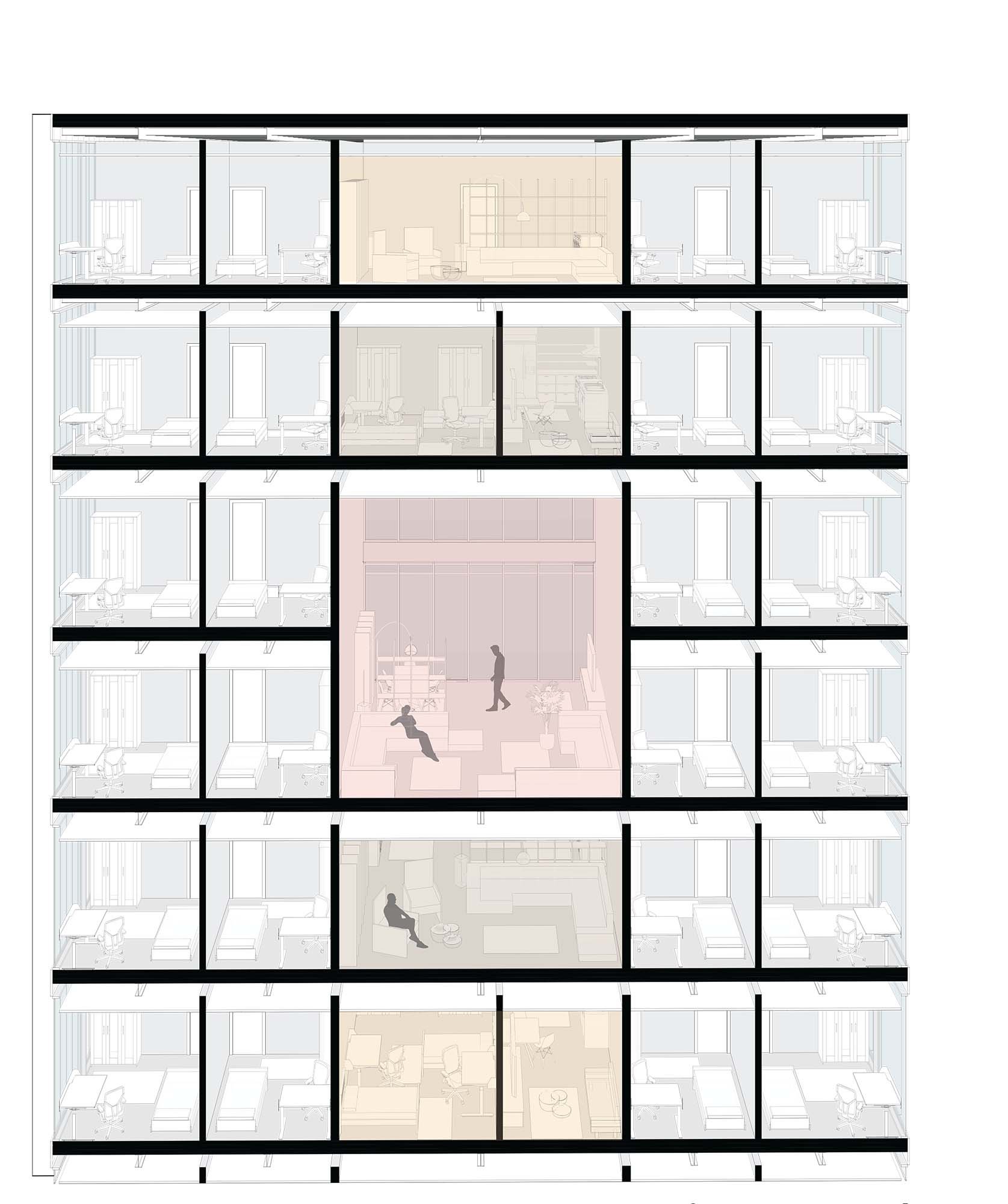
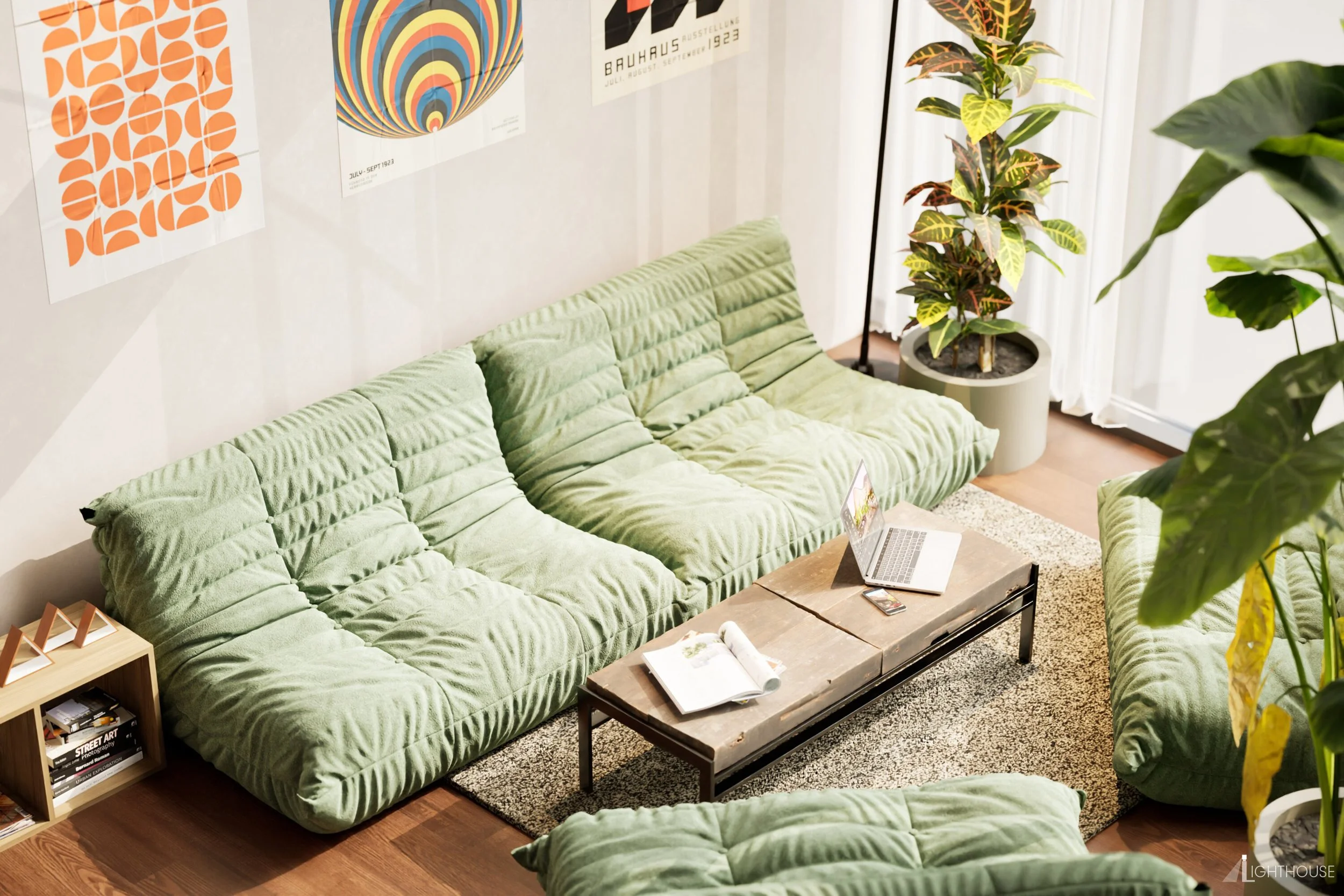
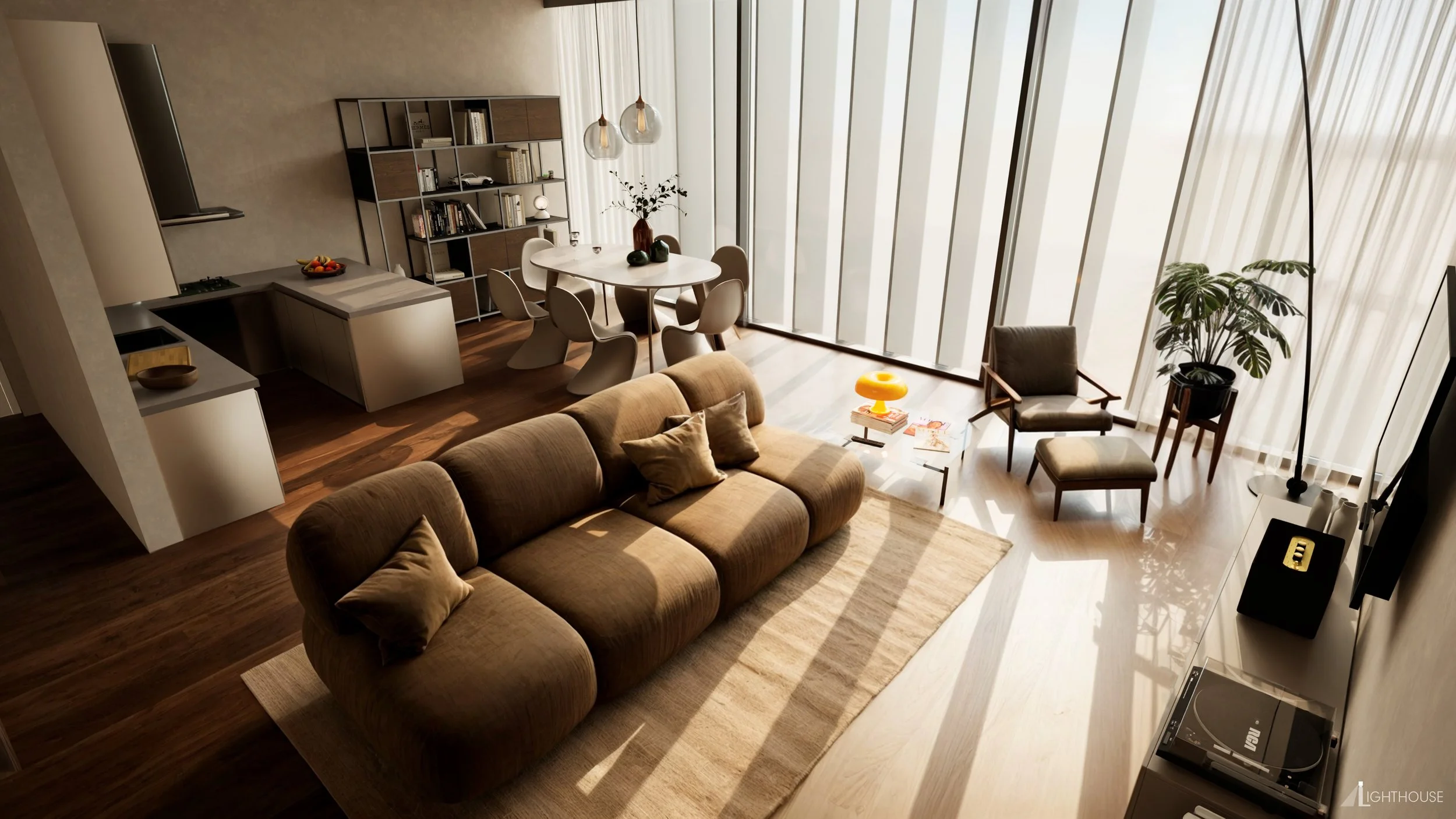
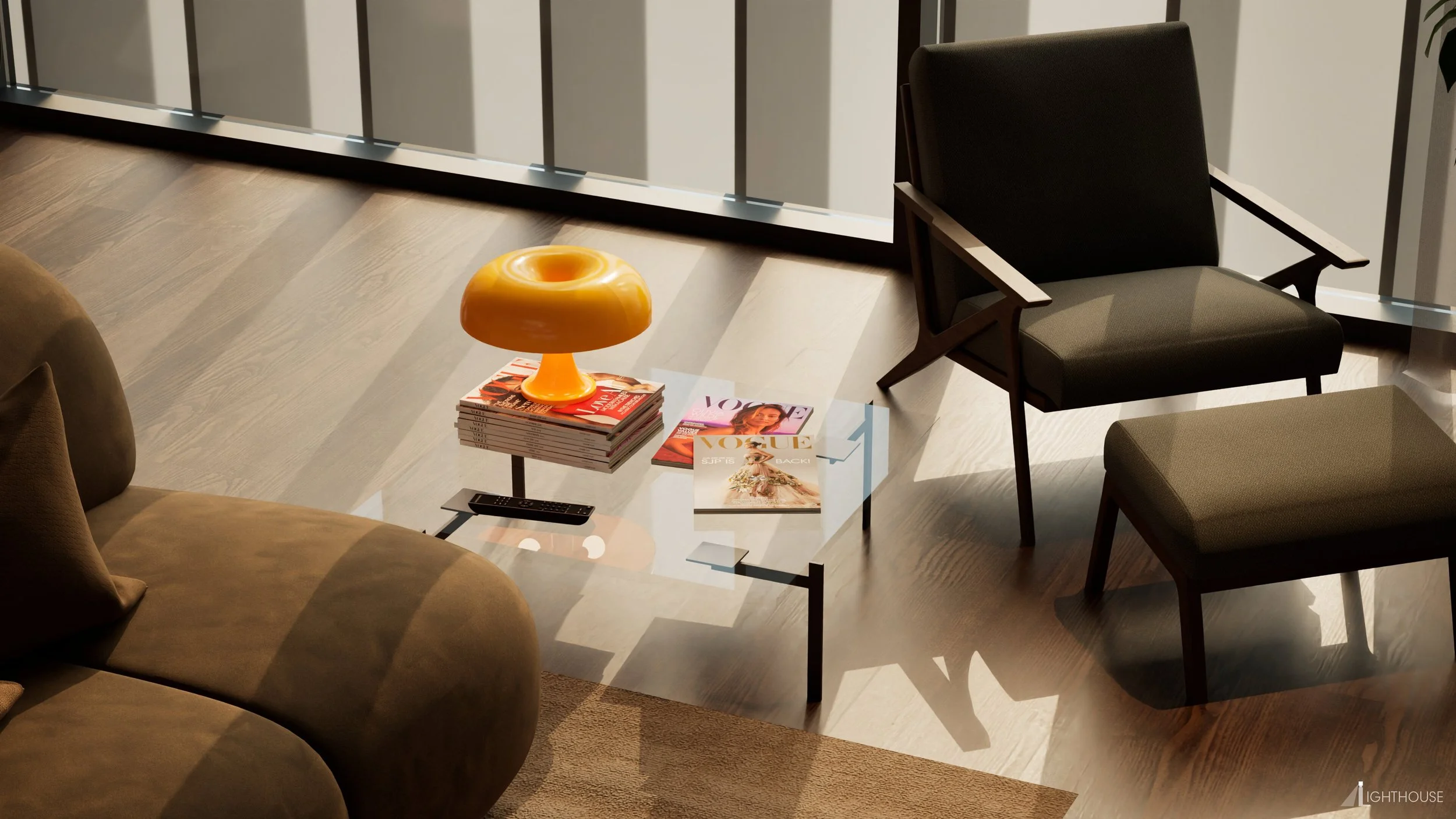
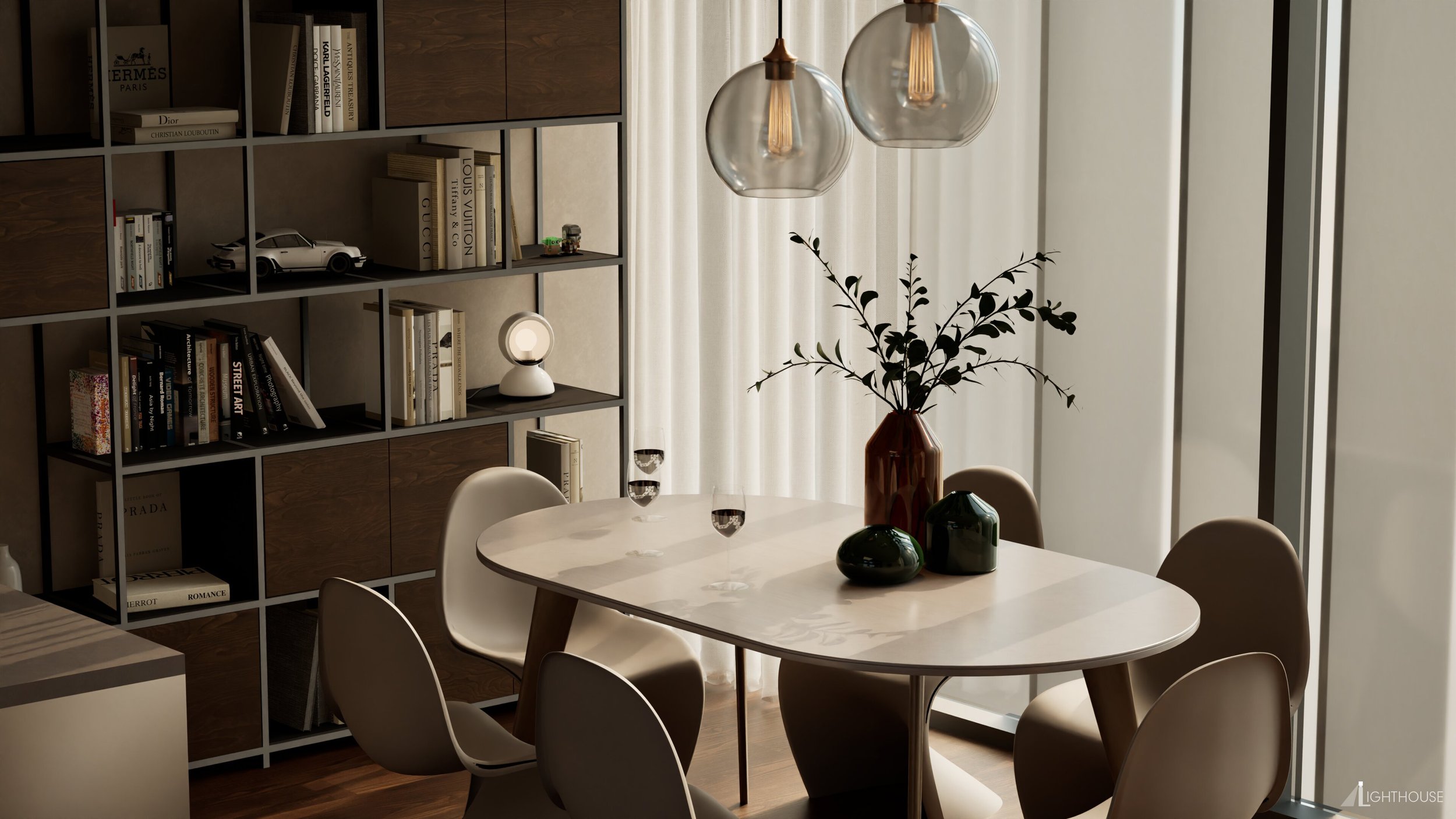
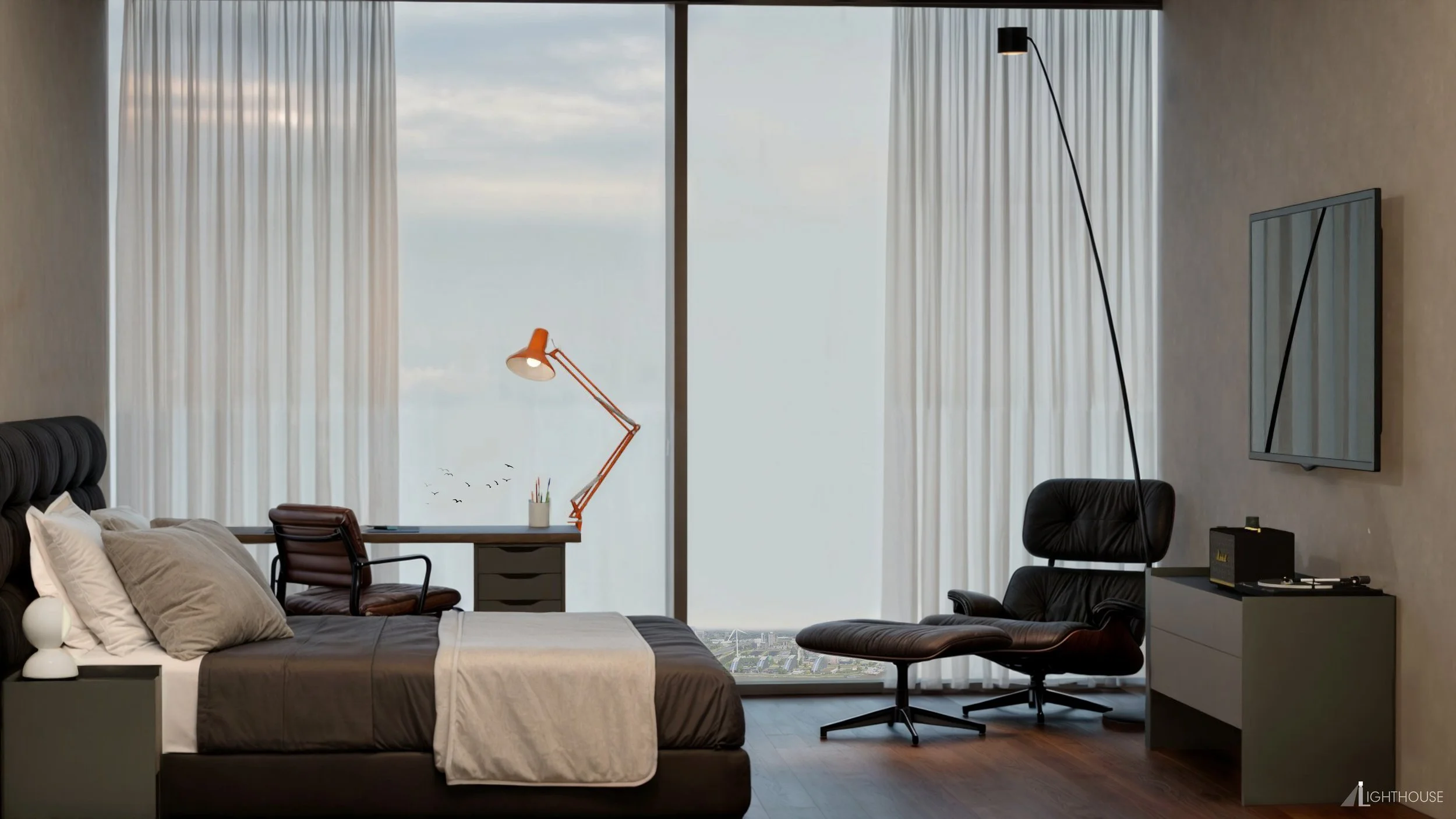
The residential floors are designed to accommodate a diverse community, primarily targeting young professionals, students, and small families, in line with the project’s broader vision of fostering a vibrant and inclusive neighborhood. The layout is based on an efficient and carefully balanced organization that maximizes natural light, cross-ventilation, and panoramic views toward the river and the city. Compact units are positioned strategically to encourage flexibility and affordability, while larger double-facing apartments are interwoven within the plan to provide expansive living spaces and a stronger connection to the surrounding landscape. Shared functions are integrated within the vertical sequence of the building, introducing communal spaces that promote interaction and collective living. The residential typologies draw inspiration from Dutch housing traditions, combining narrow vertical proportions with contemporary spatial openness. This hybrid approach generates a dynamic architectural language that moves beyond the idea of a conventional residential tower, creating varied spatial experiences while strengthening the sense of community among residents.
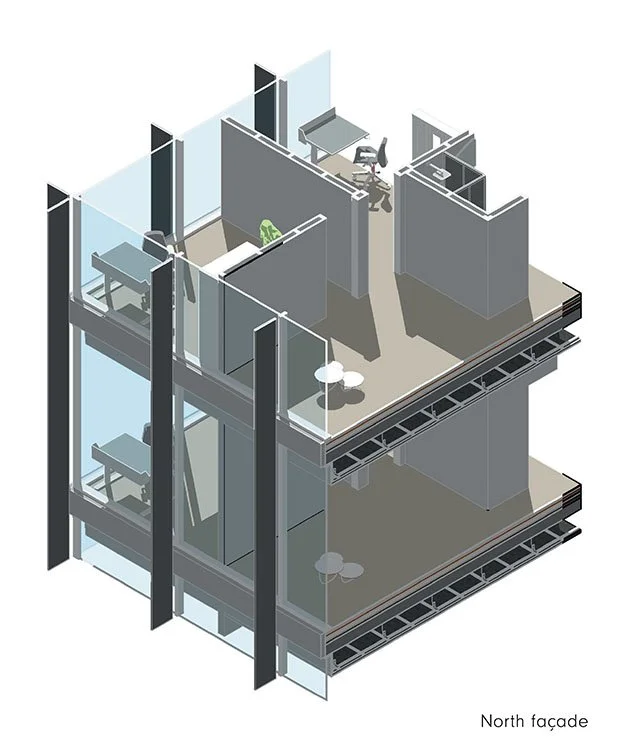
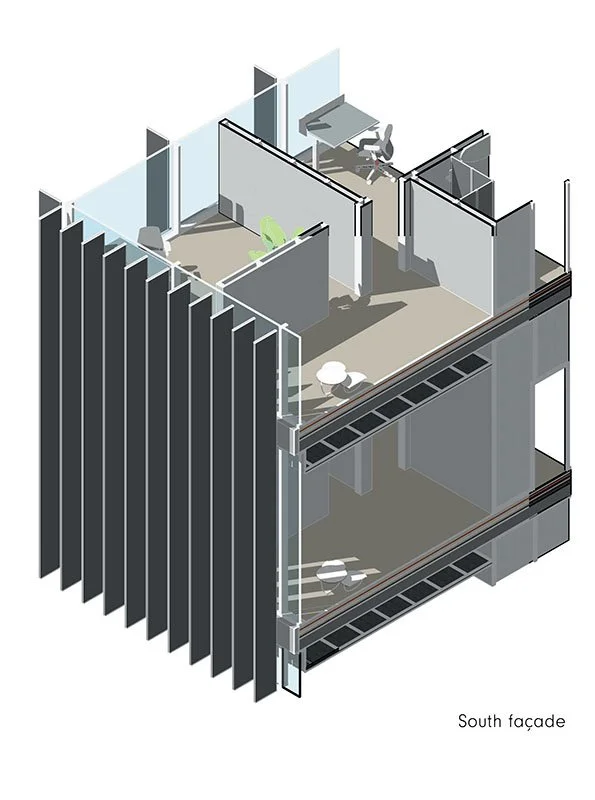
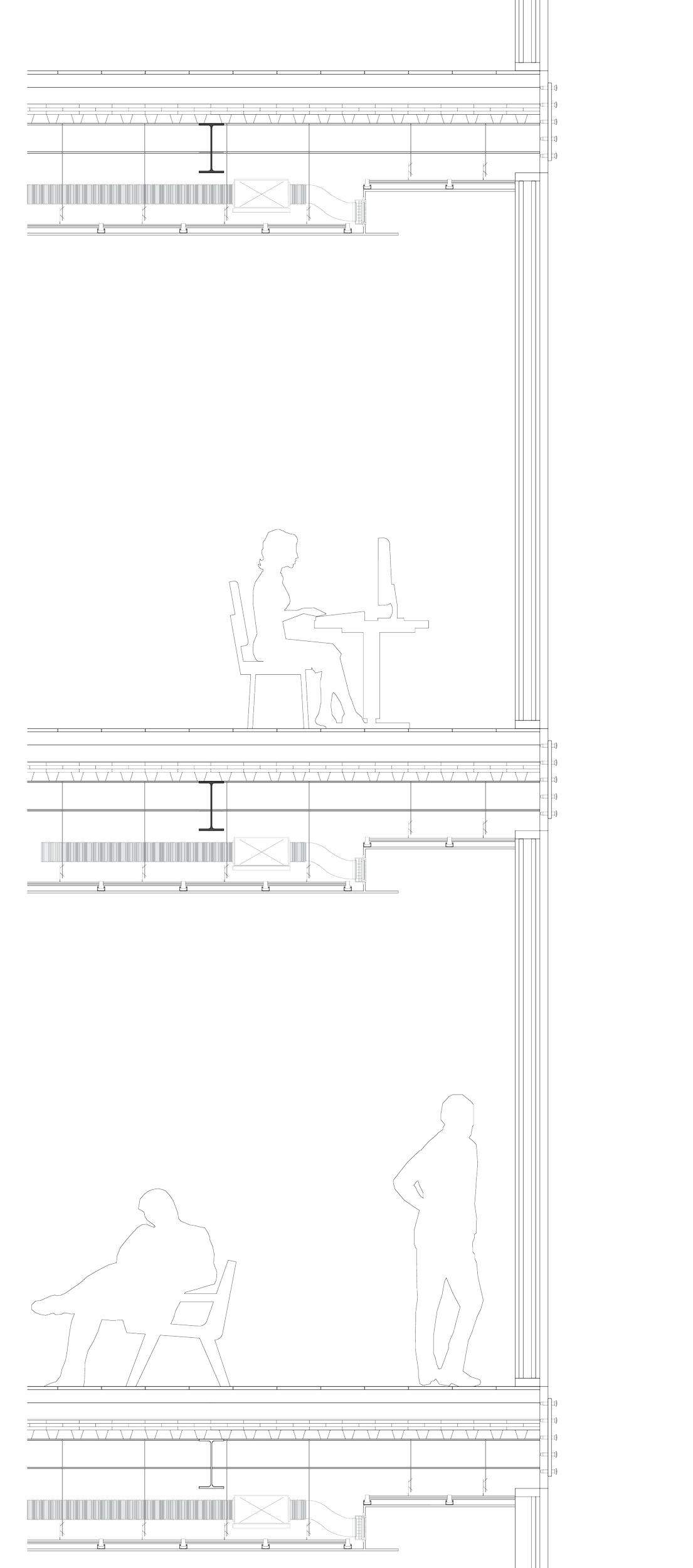
facade details
neighborhood market
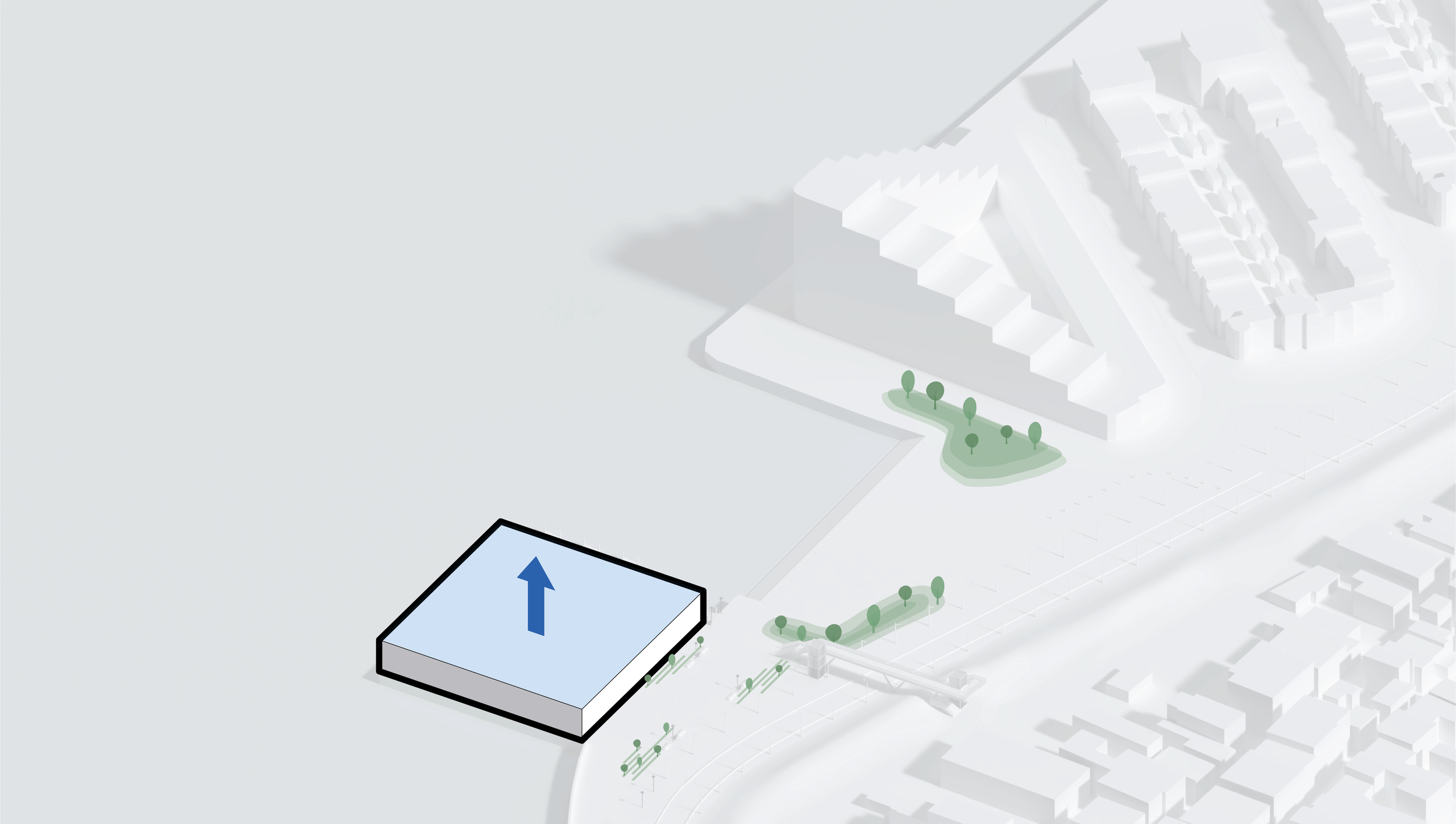
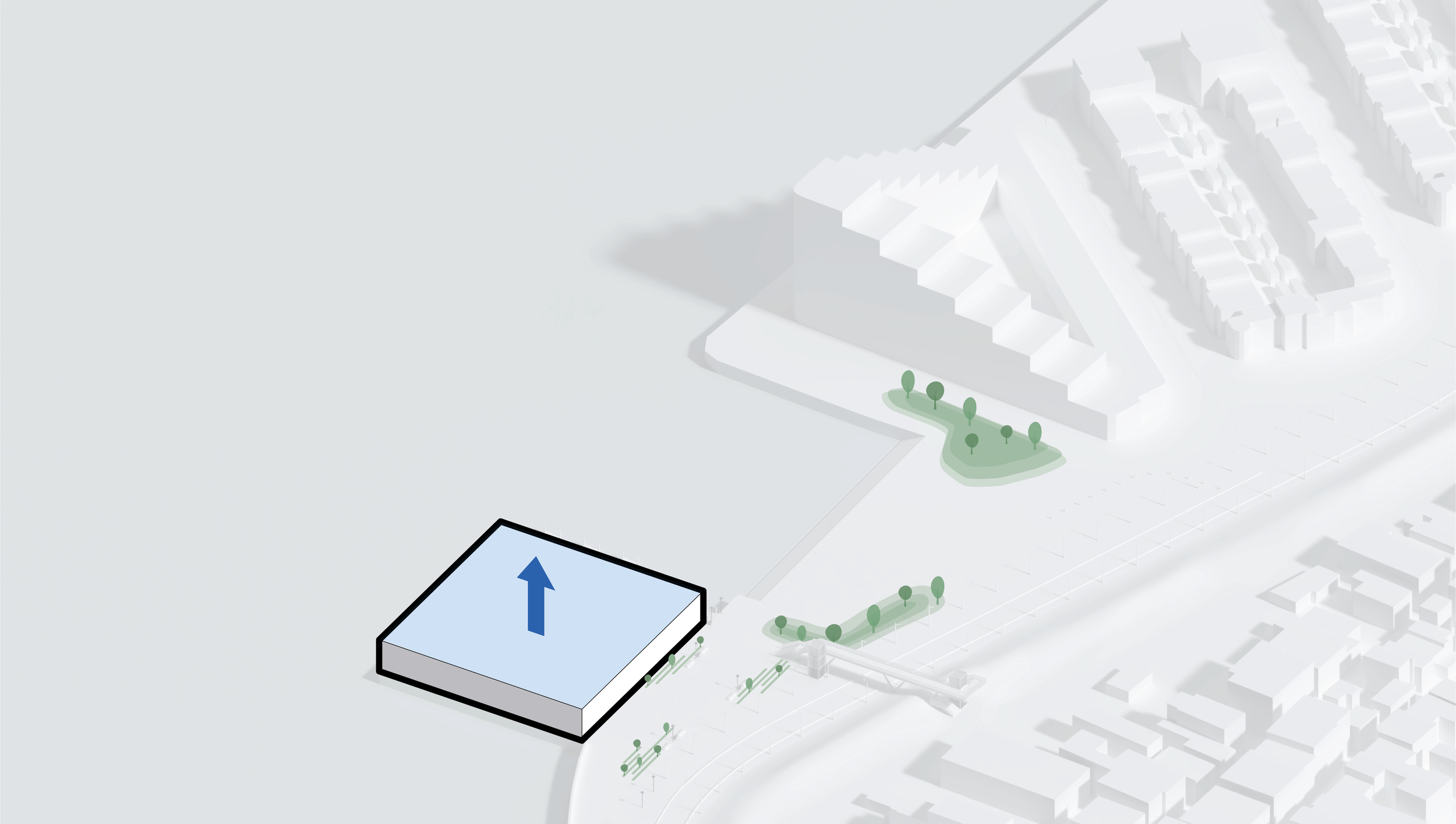
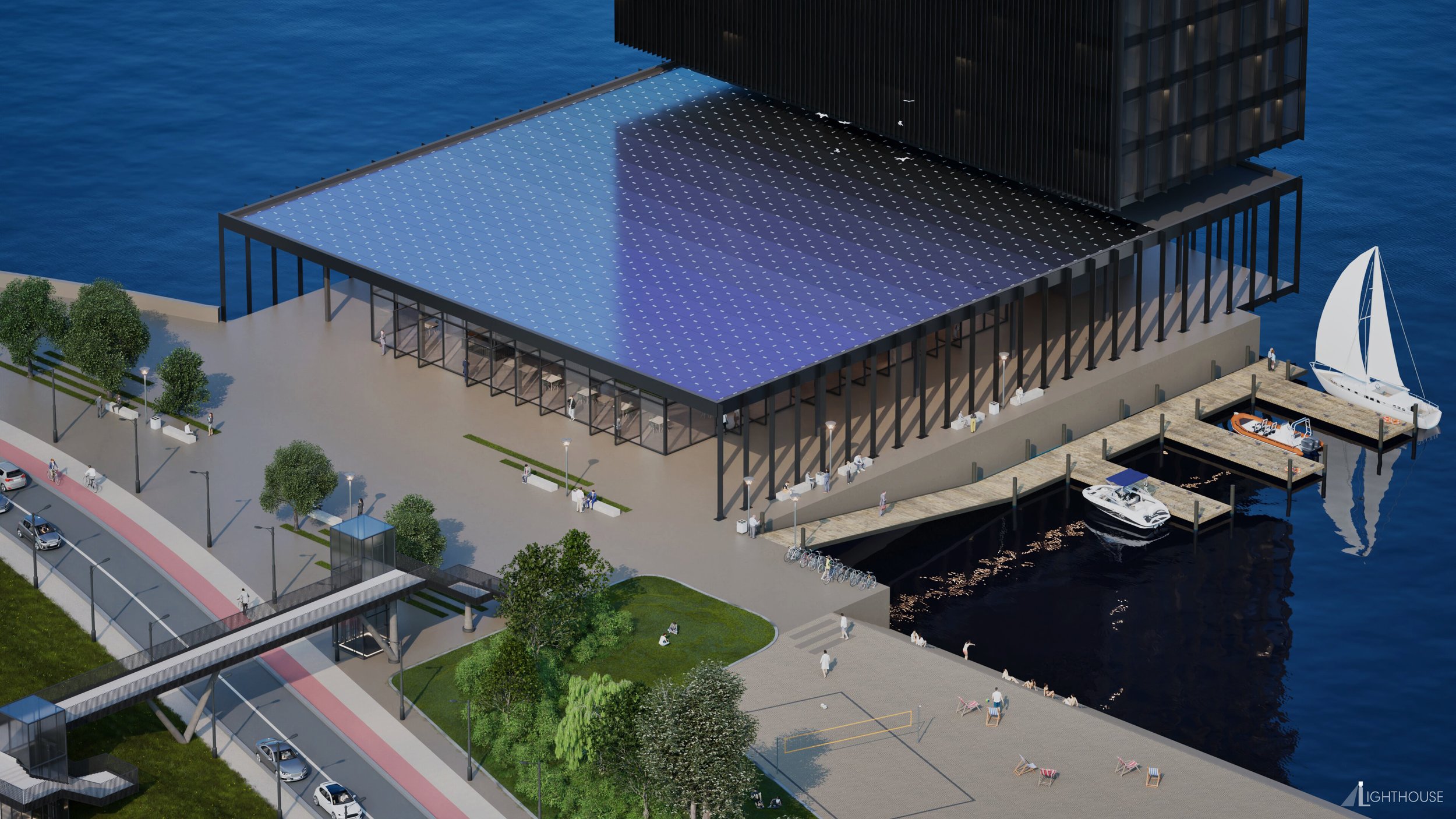
At ground level, the tower rises from an open and permeable podium elevated above the water, creating a generous public plaza framed by a brise-soleil structure. This suspended base reinforces transparency and lightness, allowing uninterrupted views toward the river while maintaining strong urban continuity with the surrounding streets. The ground floor accommodates public functions, including flexible communal spaces and container bars, designed to activate the waterfront throughout the day. Multiple access points ensure seamless integration with the neighborhood, while a dedicated pedestrian corridor and vertical connections strengthen accessibility between the plaza, pier, and sandy beach. Through these spatial strategies, the ground floor becomes the social heart of the project, anchoring the tower within a renewed and dynamic urban landscape.