House of Music
Milan
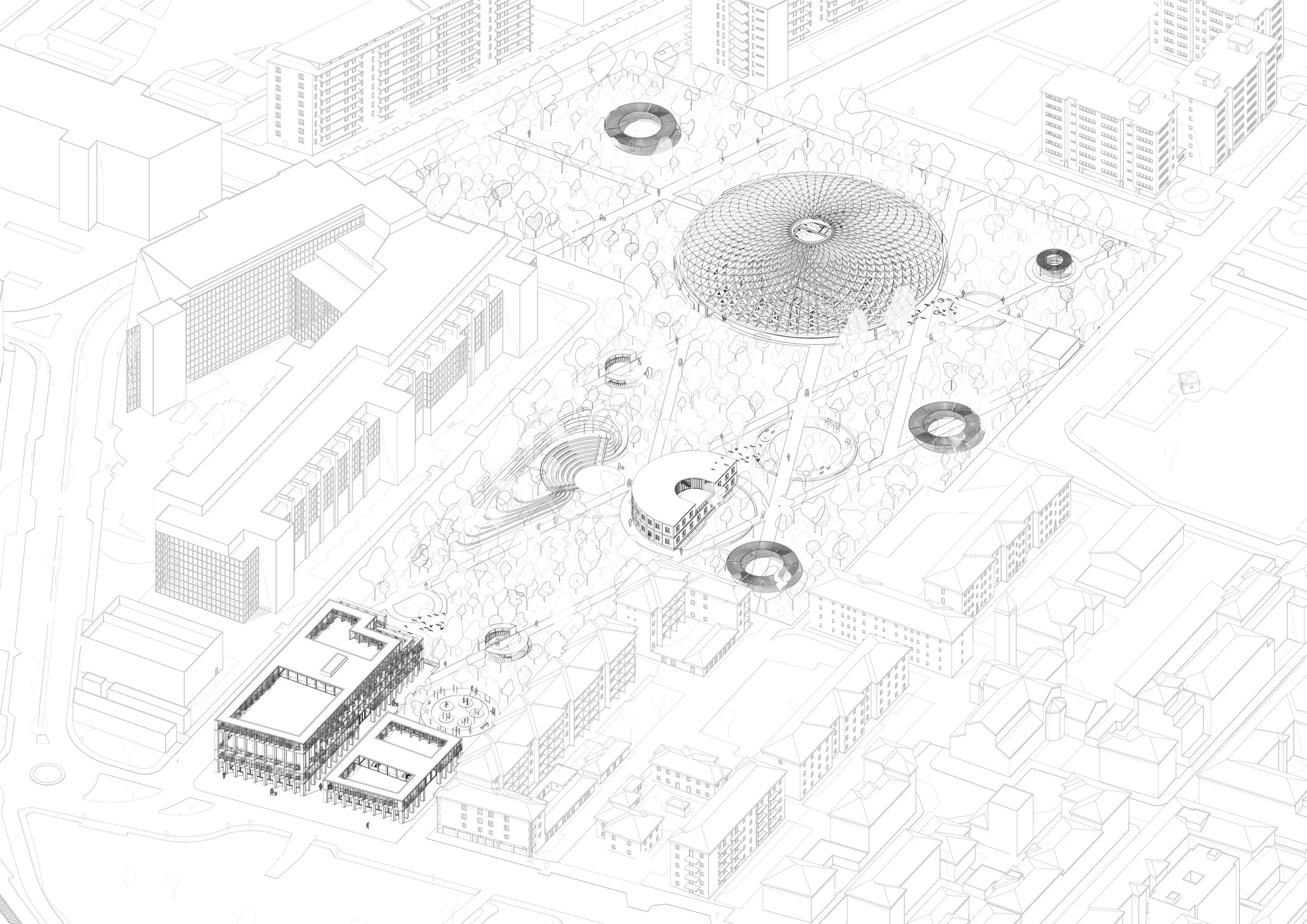
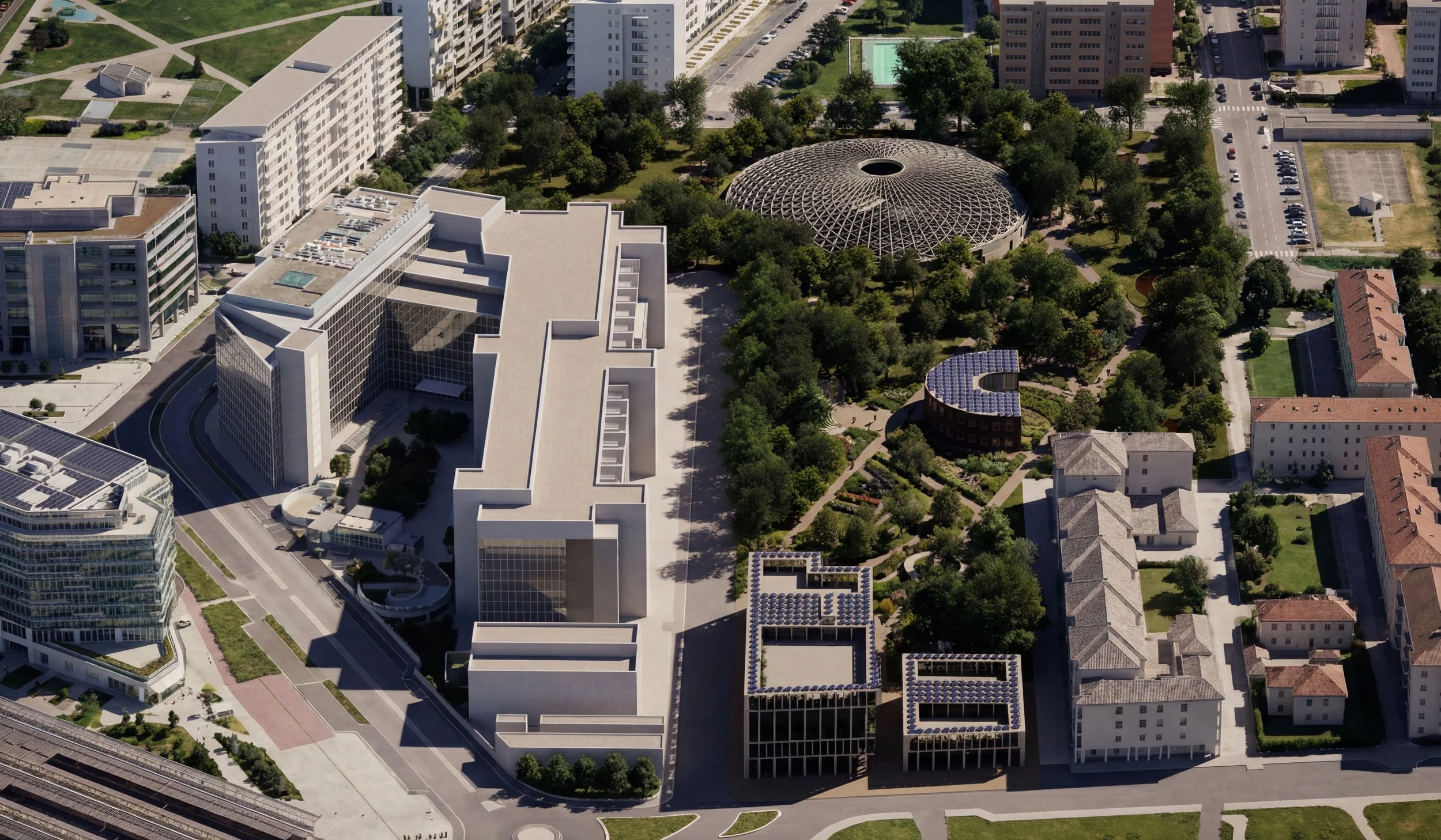
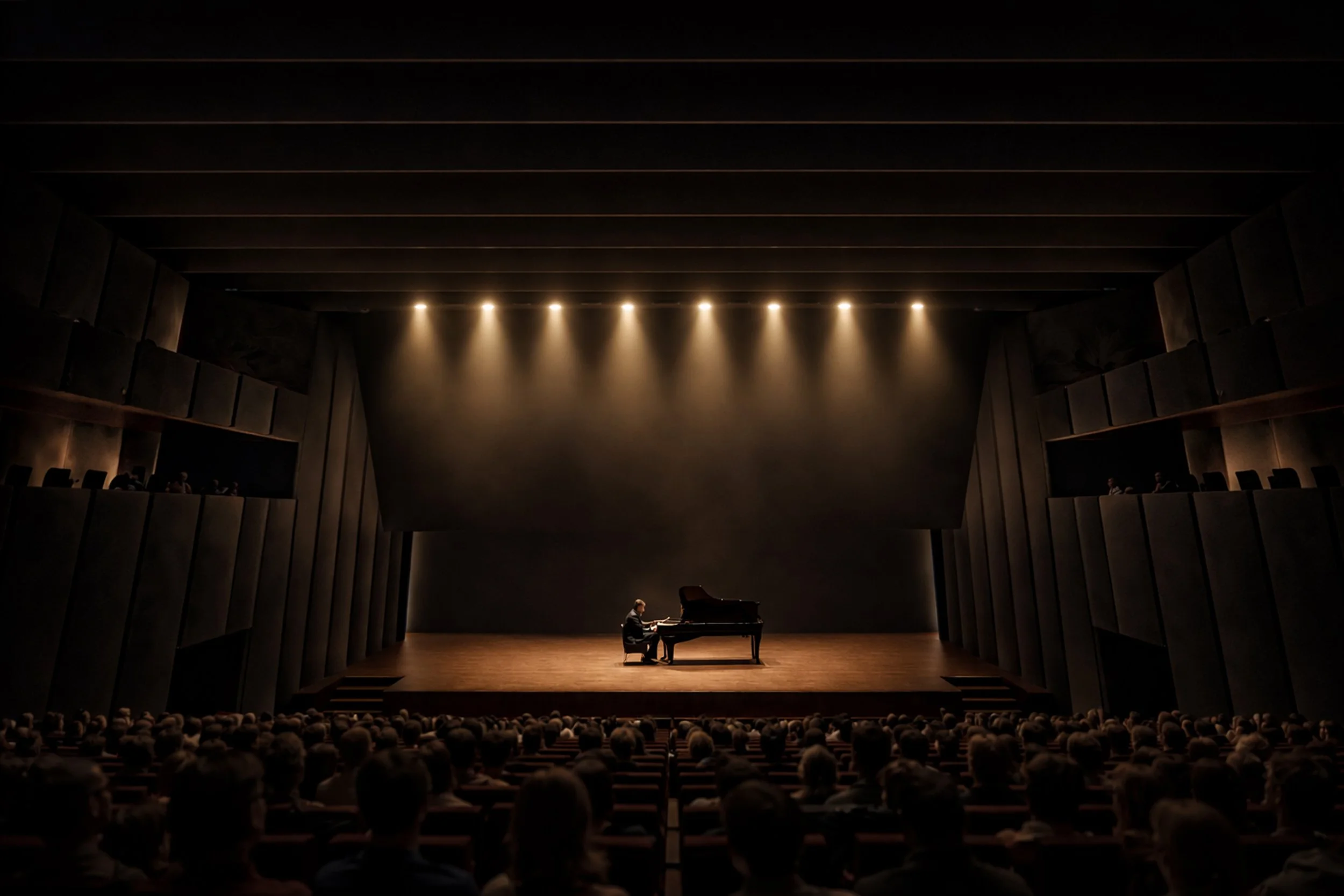
House of Music is a cultural masterplan for Rogoredo, Milan, envisioned as an act of urban and ecological regeneration. The project reconnects two fragmented plots into a continuous greenbelt inspired by the principles of the Third Landscape, transforming a marginalized and overheated area into a resilient public park. The landscape becomes the true protagonist: a permeable, evolving ecosystem that mitigates the urban heat island effect while creating new spaces for gathering, culture, and everyday life.Along the southern edge, two “gate” buildings — a mixed-use residential block with commercial functions at ground level and a public library — define a new urban threshold. Acting as a filter between the neighborhood and the park, they generate activity, social interaction, and economic vitality, while framing the main access to the green core of the project.At the heart of the masterplan lies a subterranean auditorium, carved into the ground like a mineral void. The building unfolds across multiple interconnected underground levels, hosting the main concert hall, foyer, rehearsal rooms, classrooms, and backstage areas. By placing the architecture below ground, the intervention minimizes its visual impact and allows the park to remain uninterrupted. Emerging from the landscape, a single dome becomes the only visible landmark — a symbolic presence that expresses the dialogue between architecture and nature, and marks the new cultural identity of Rogoredo.
underground auditorium
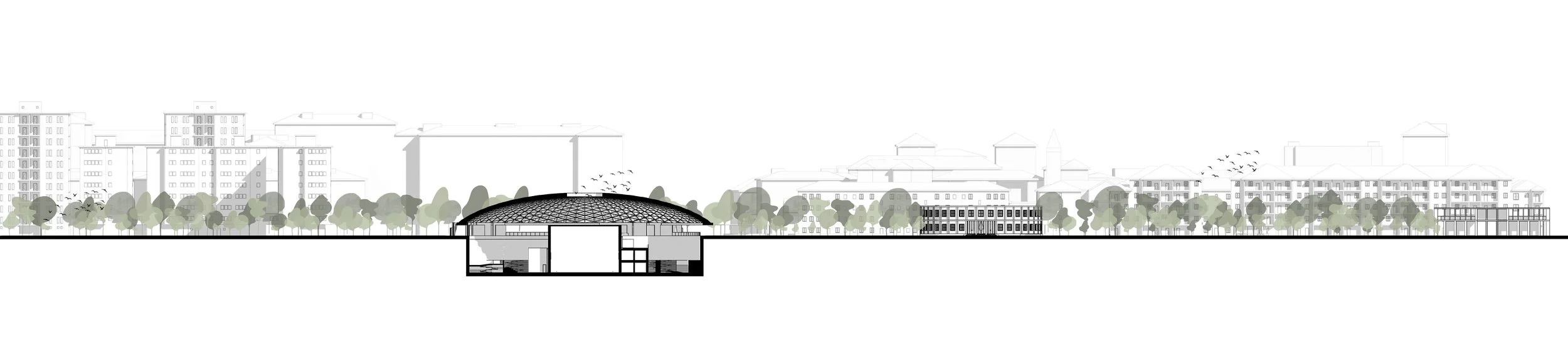
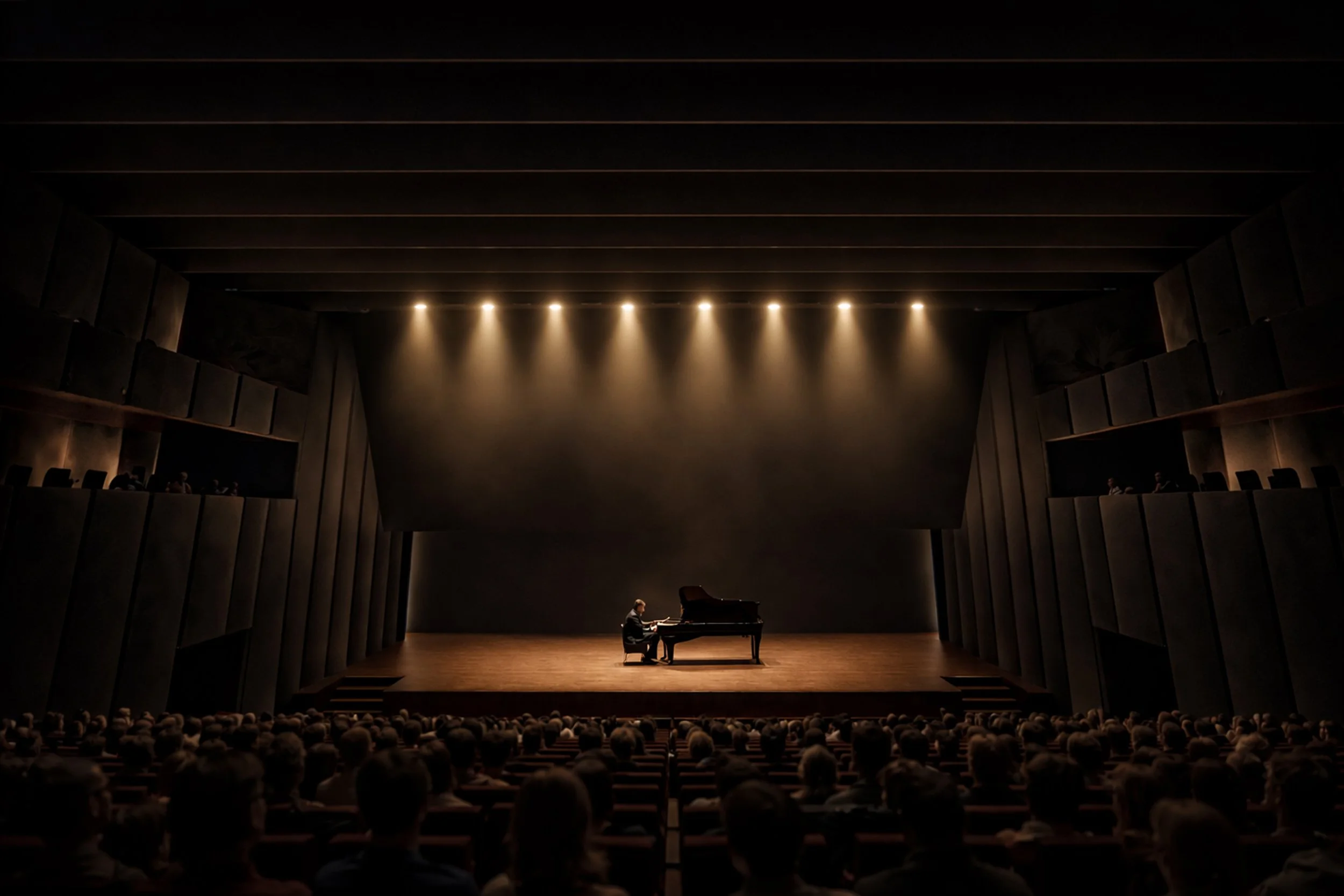
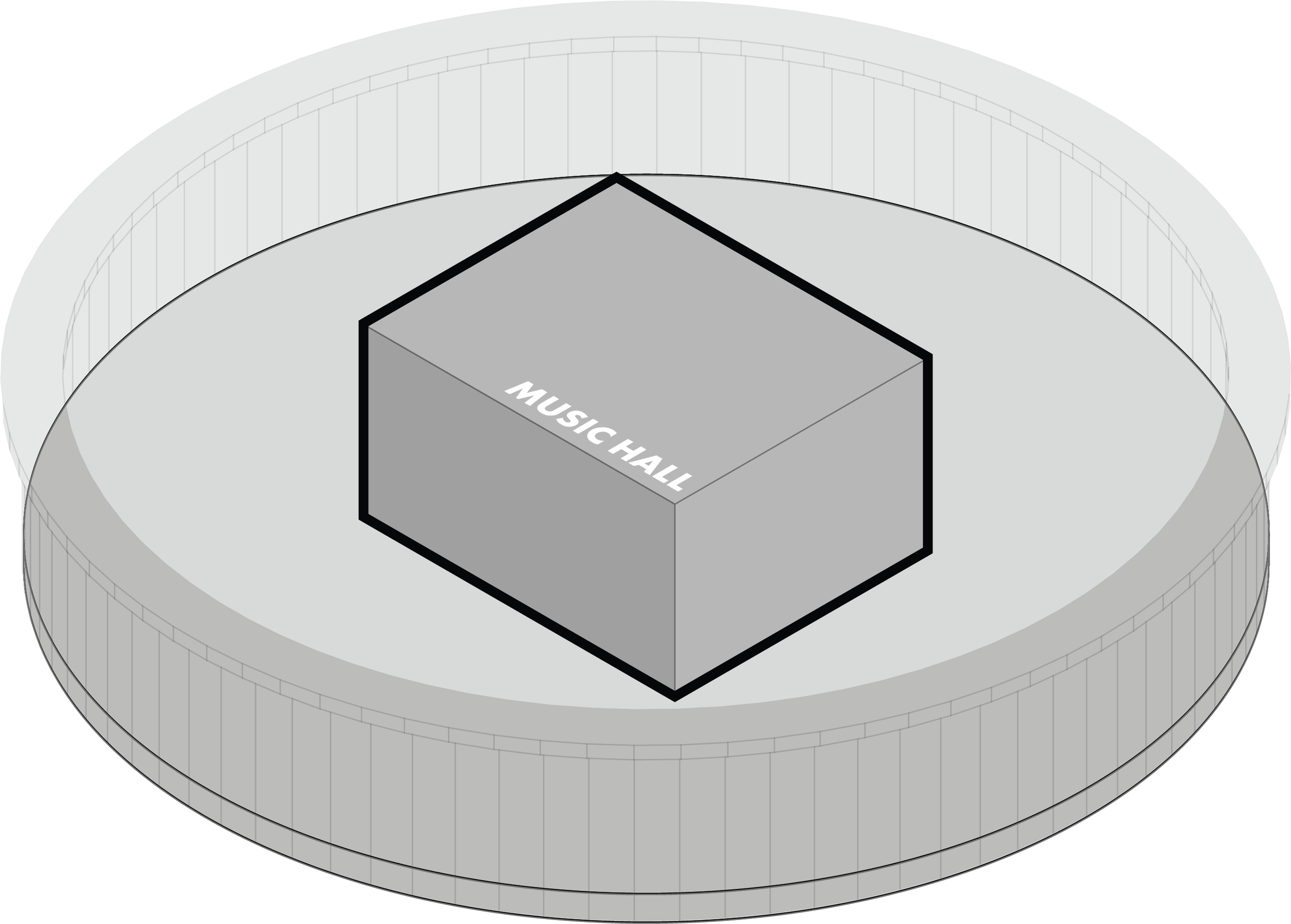
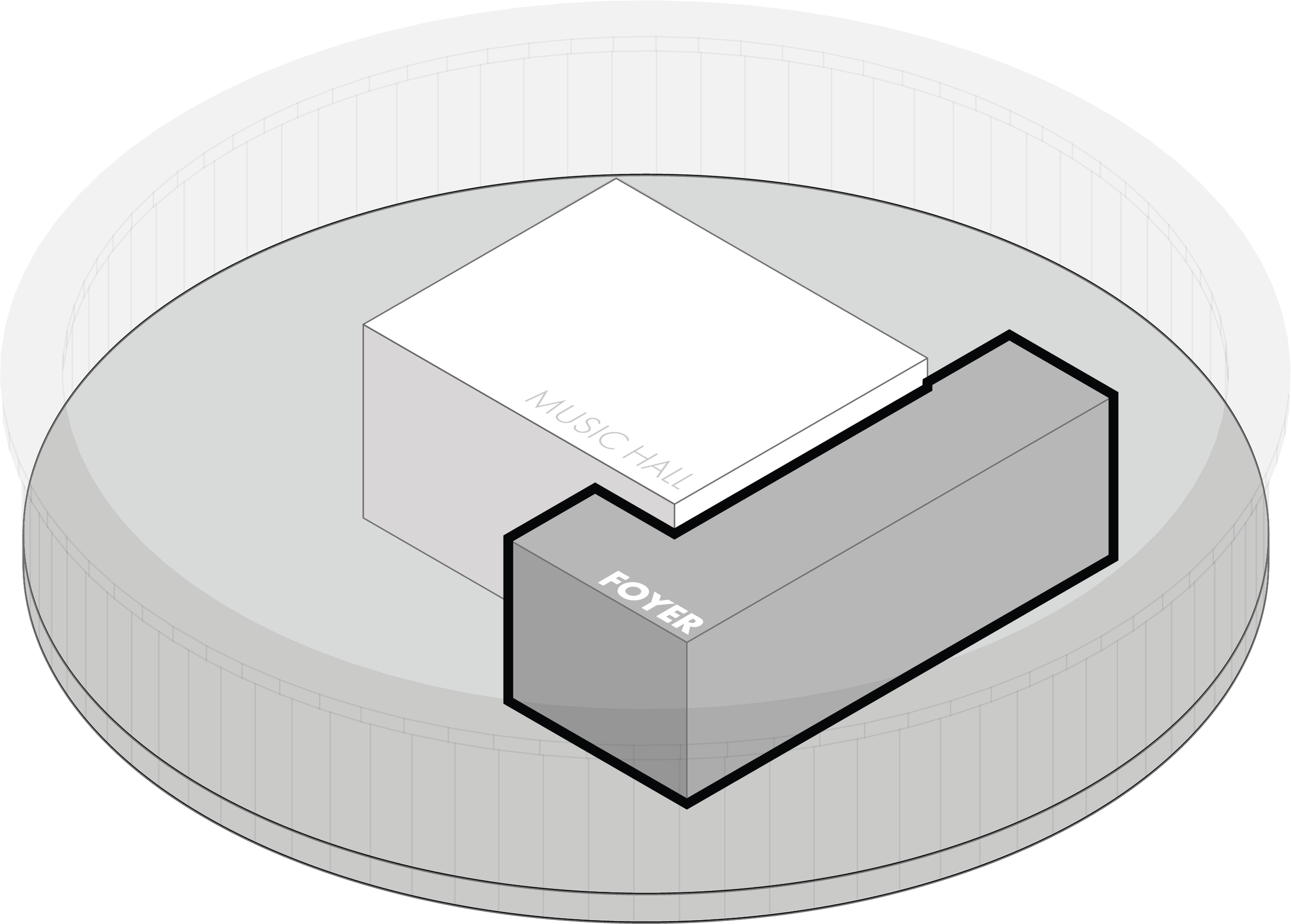
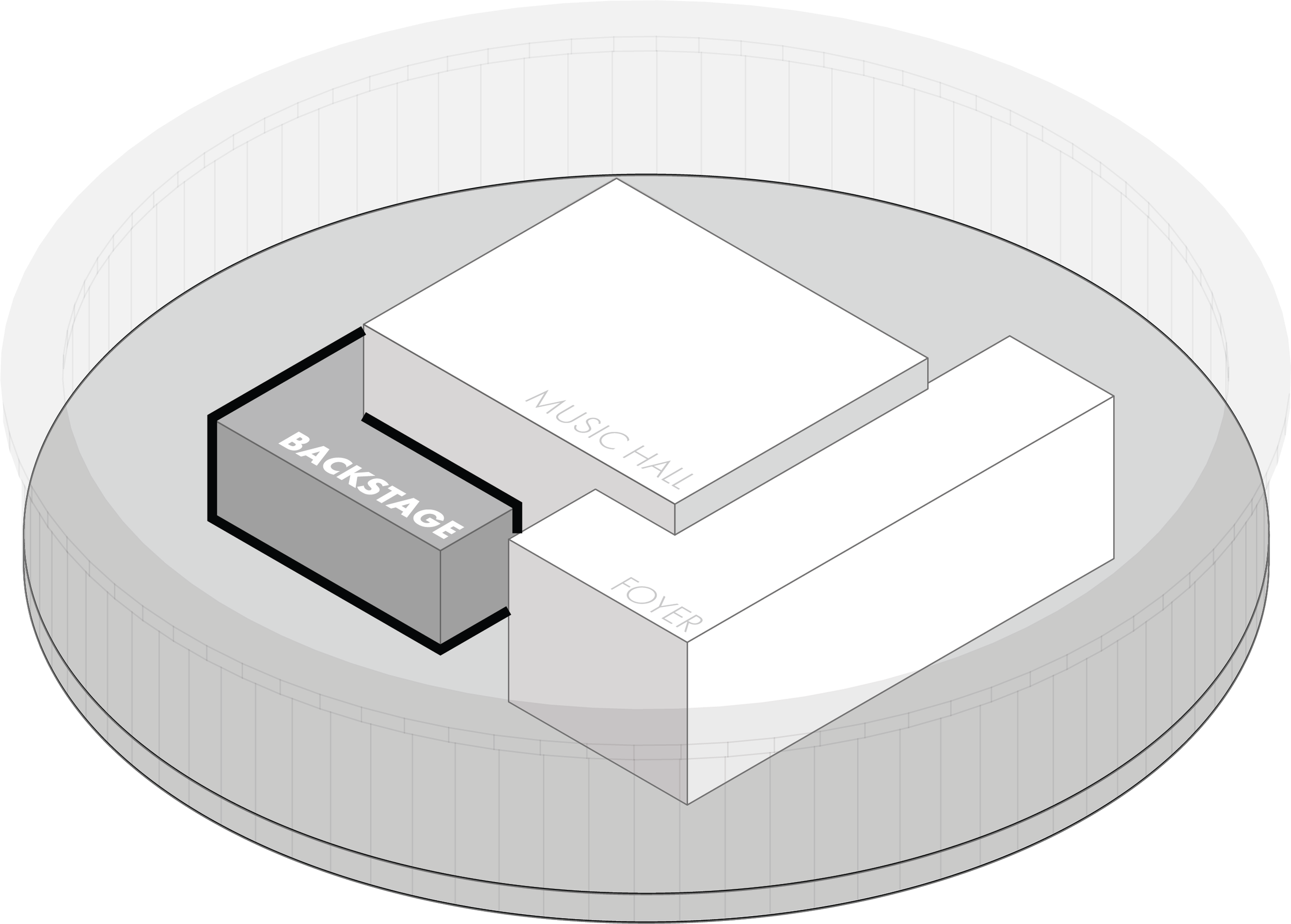
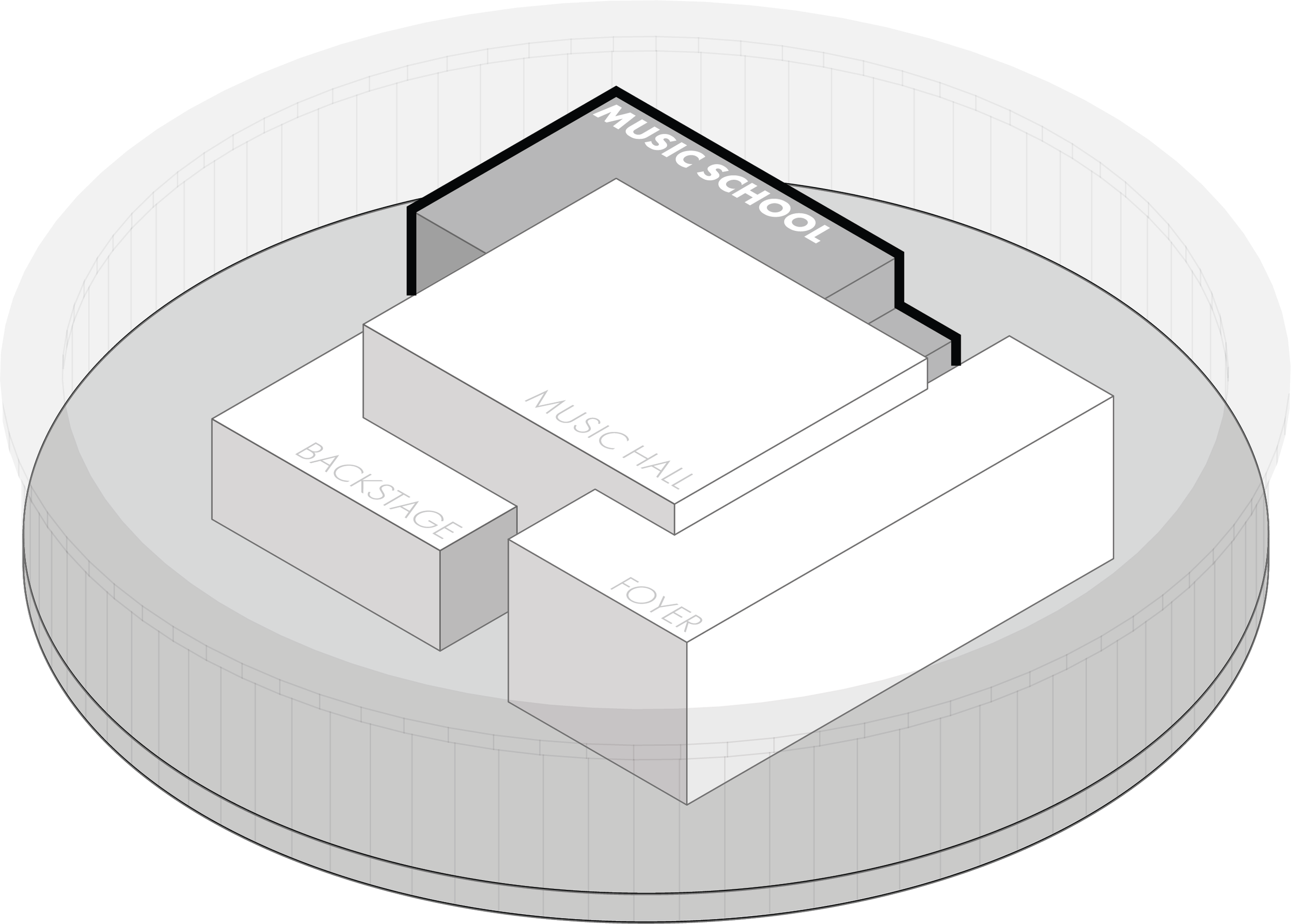
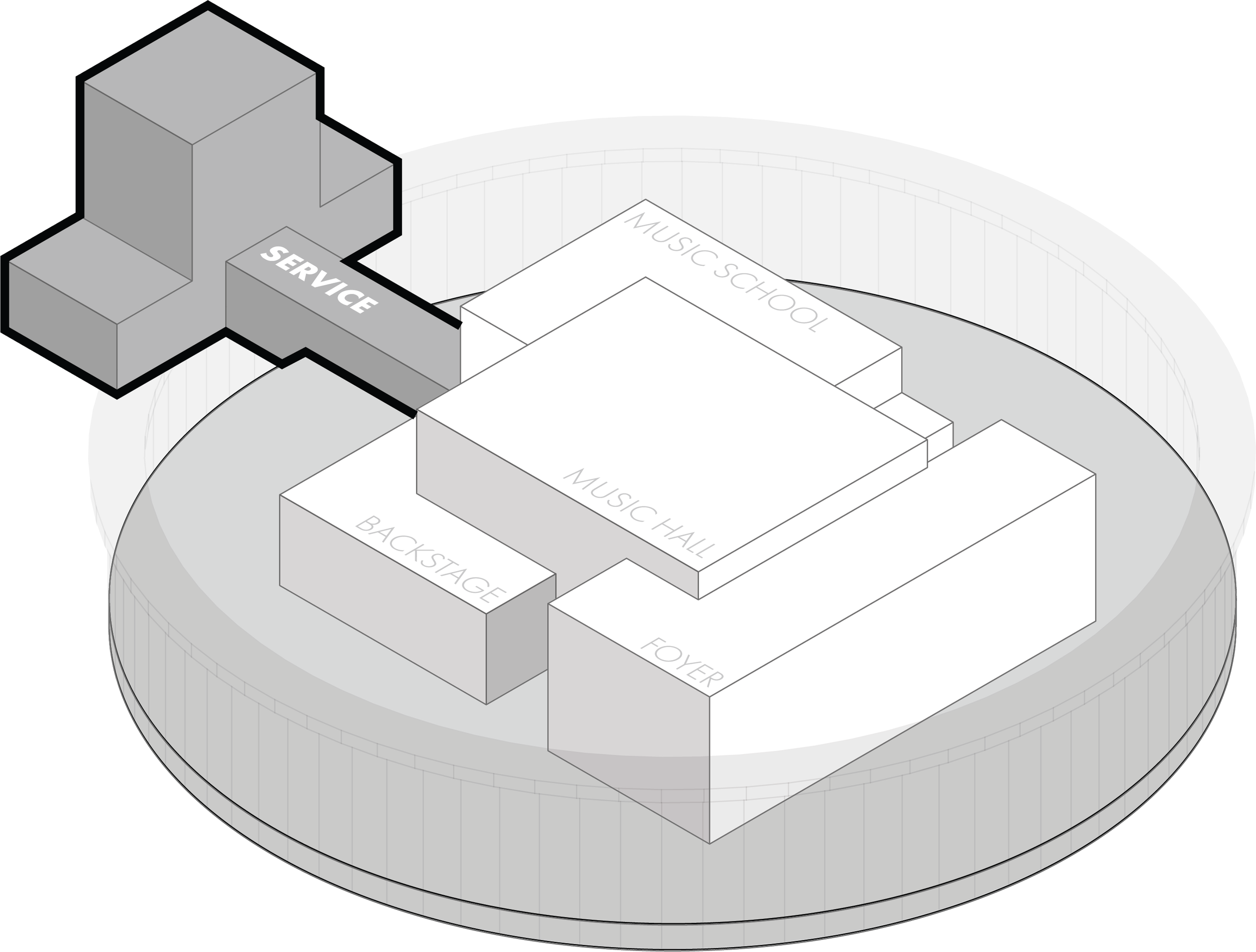
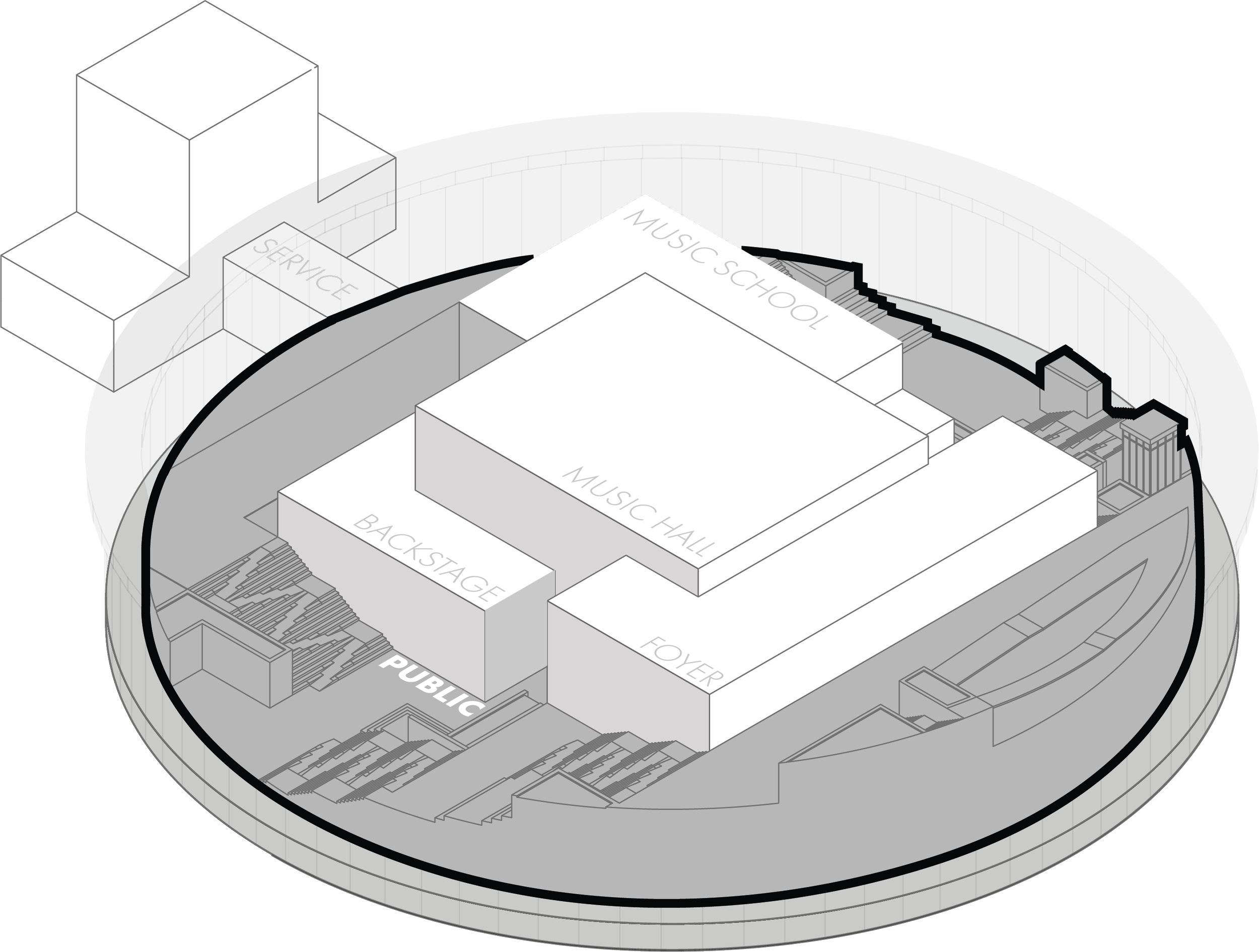
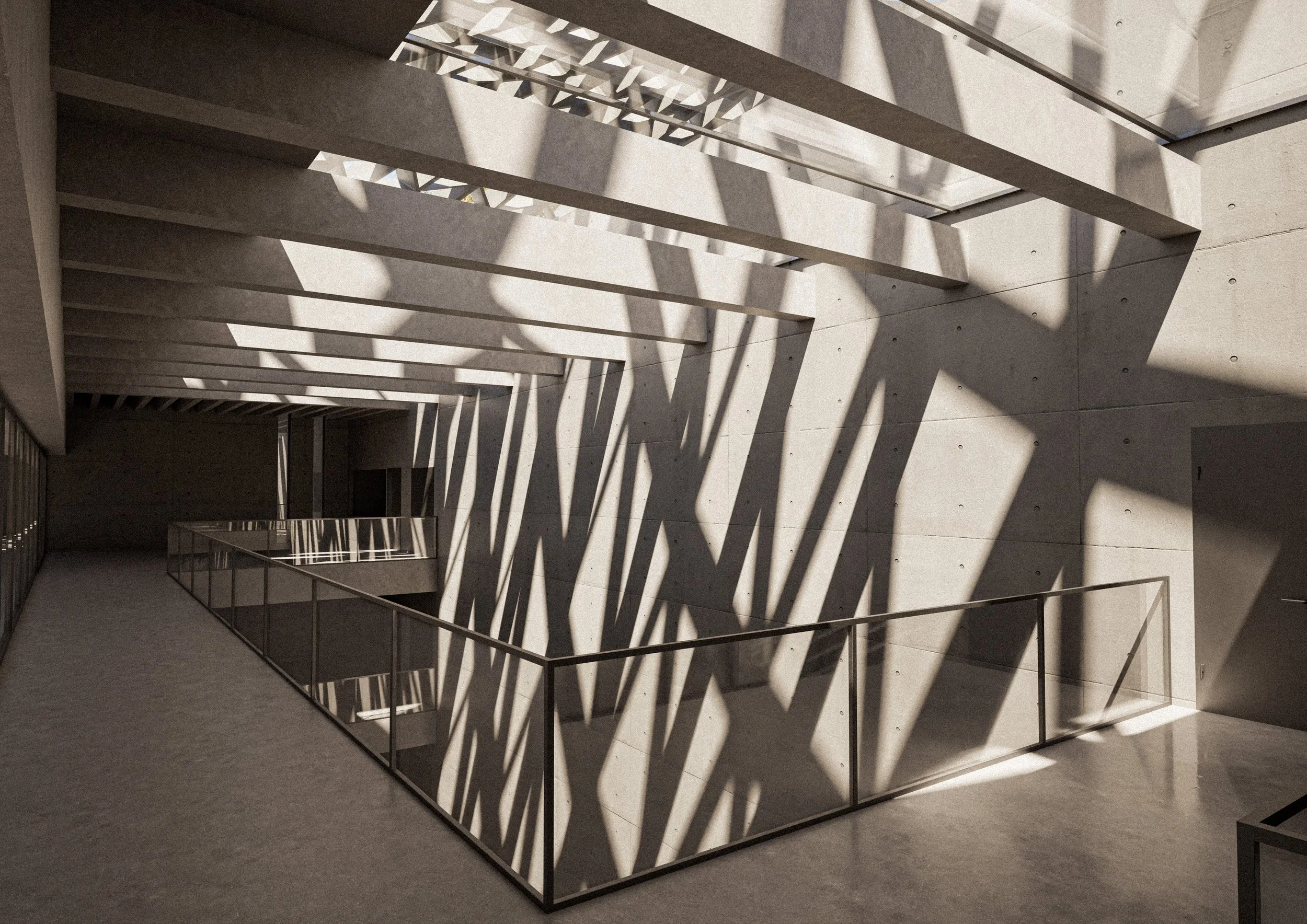
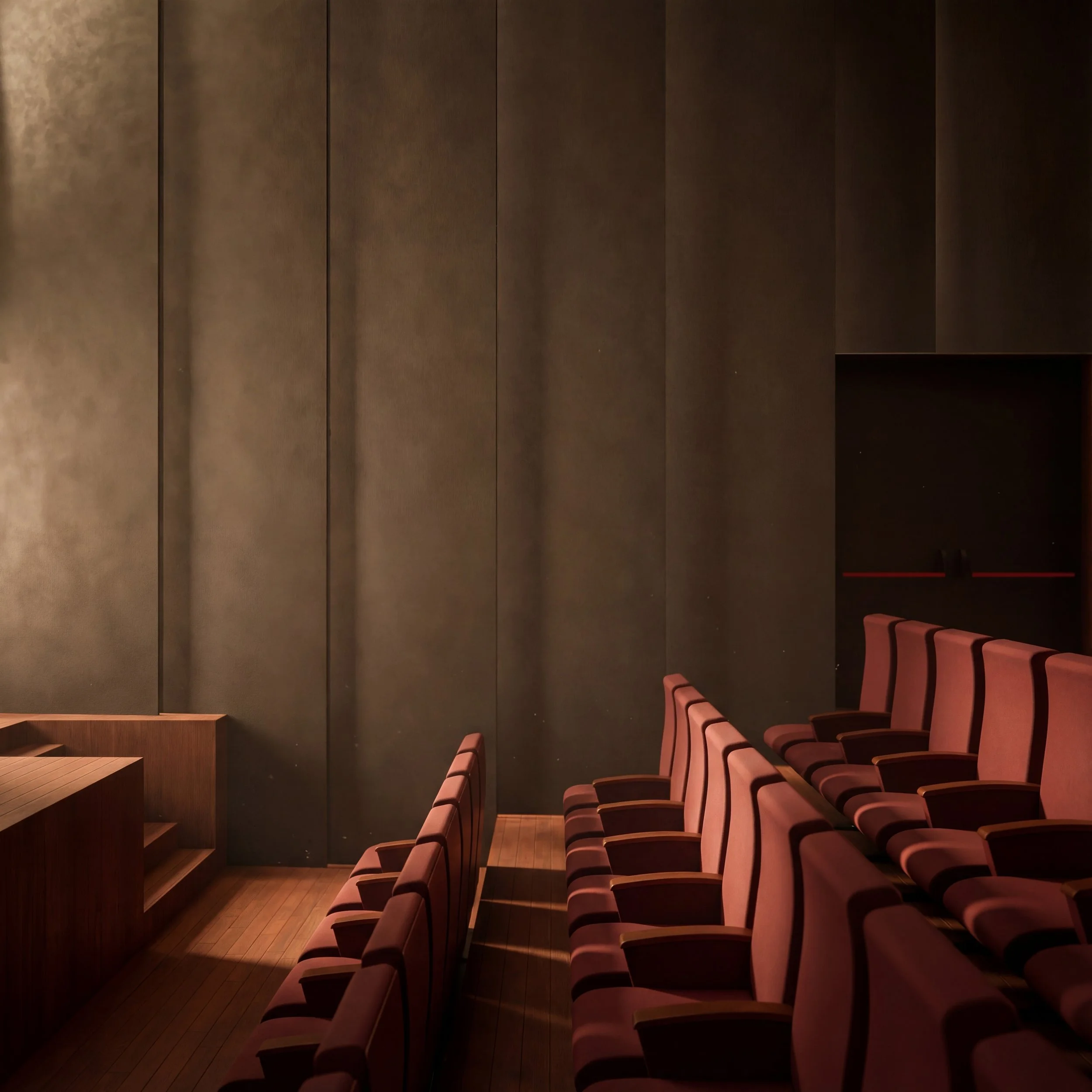
The auditorium is conceived as a subterranean architecture, carved into the ground like a mineral void at the heart of the park. Rather than emerging as a dominant object, the building develops across three interconnected underground levels, allowing the landscape to remain continuous and uninterrupted above. The main concert hall forms the core of the composition, surrounded by foyer spaces, rehearsal rooms, classrooms, backstage areas, and technical facilities, all organized through a system of volumes placed at different elevations. While the plan is defined by clear and essential geometries, the spatial complexity unfolds in section, where varying heights create a dynamic sequence of spaces fully accessible from multiple points and levels.
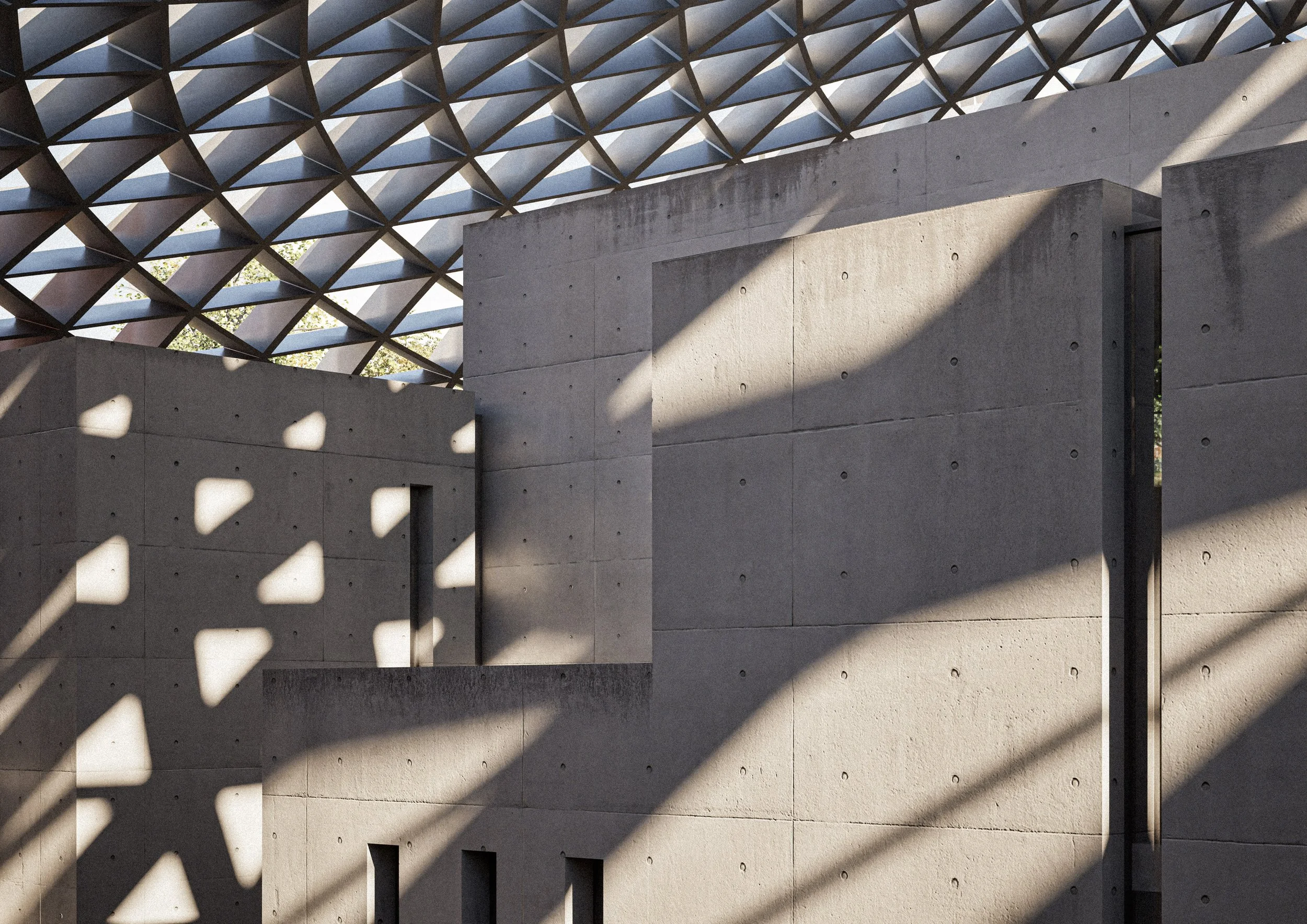
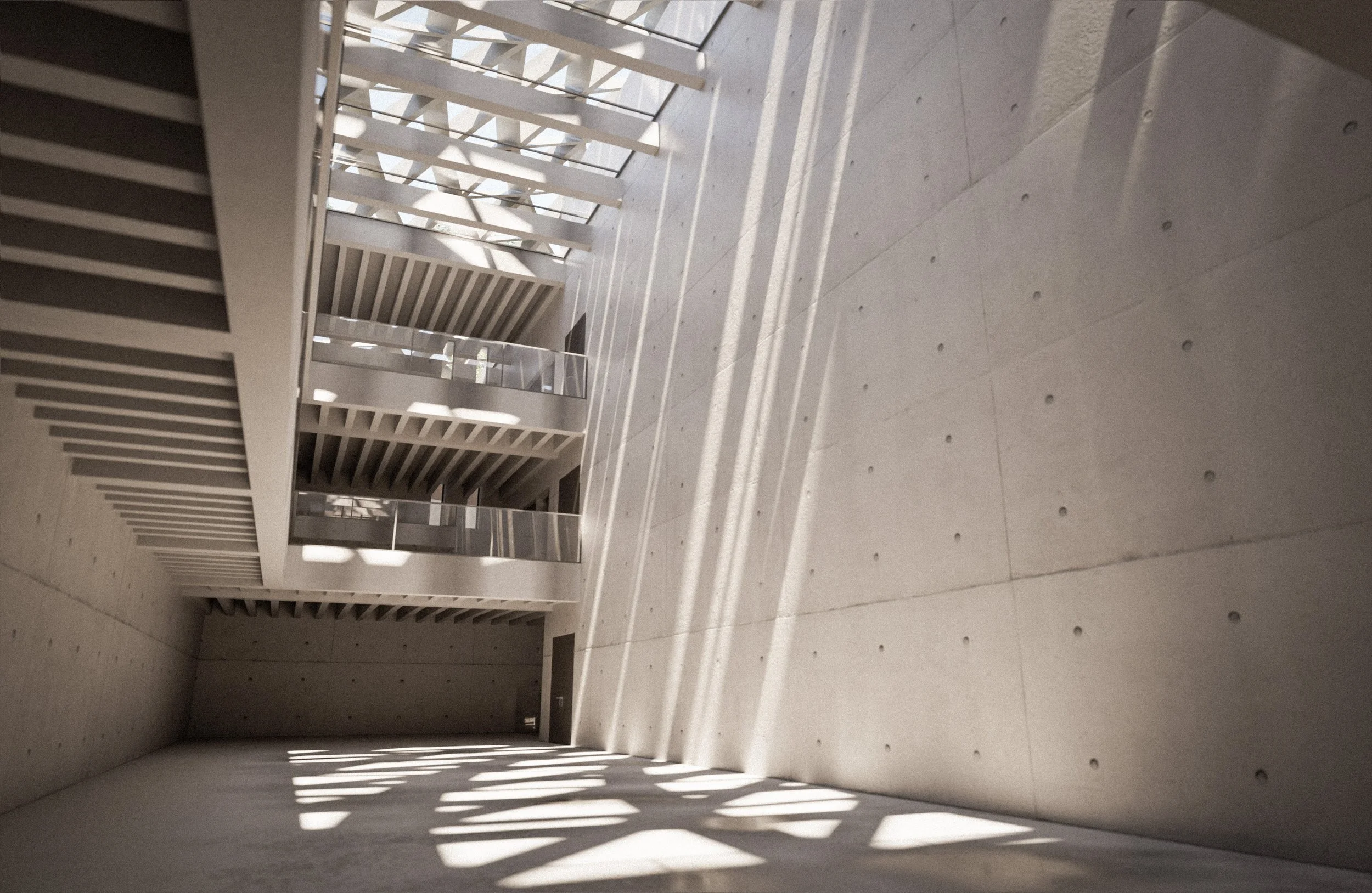
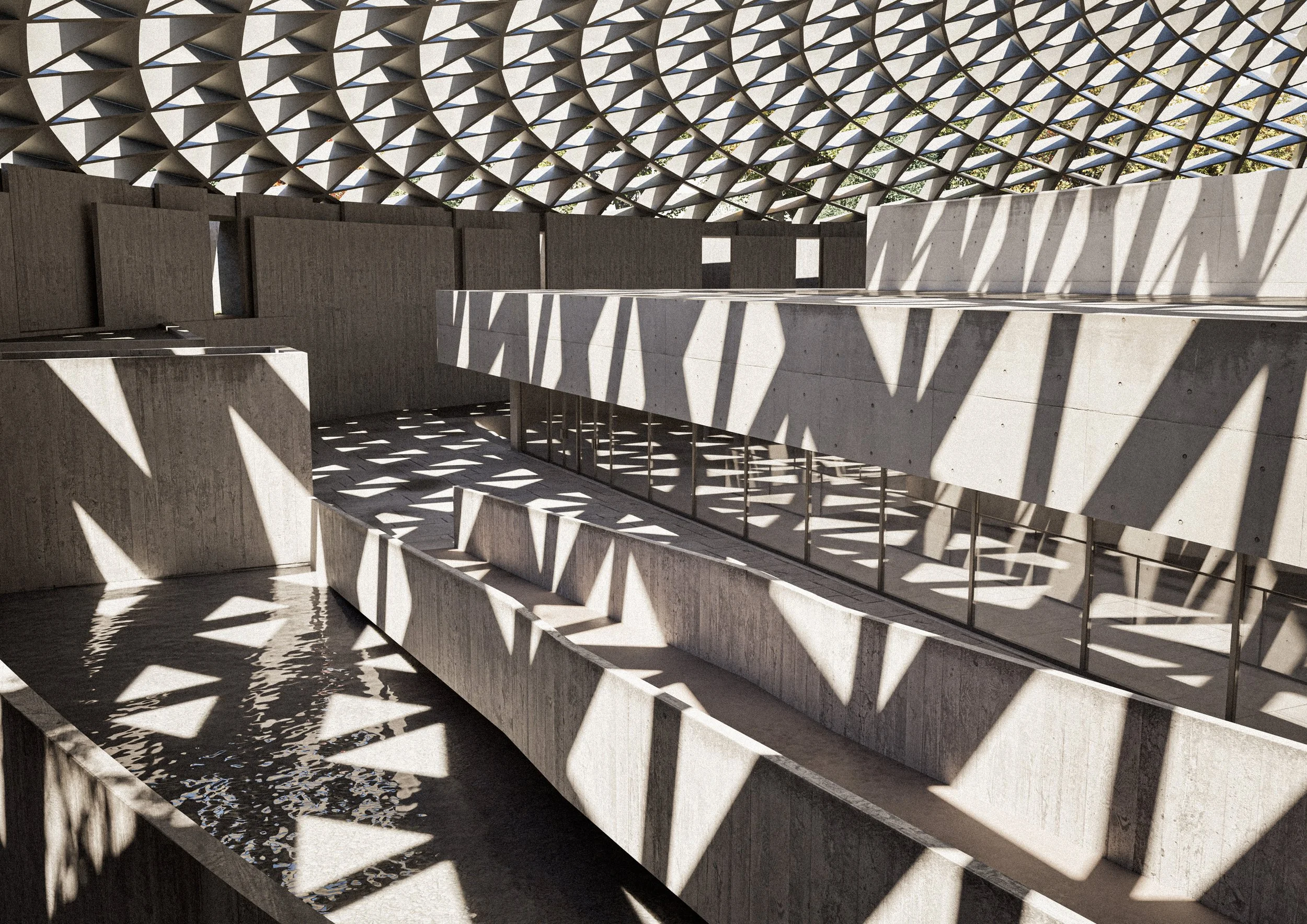
Natural light penetrates the underground environment through full-height incisions that cut through the mass like openings in stone, reinforcing the perception of being inside a “mineral garden.” Above ground, only a dome emerges as a landmark element — a symbolic and protective presence that marks the cultural center without overwhelming the park. The result is an architecture embedded in the earth, where sound, space, and landscape converge into a single immersive experience.
natural park
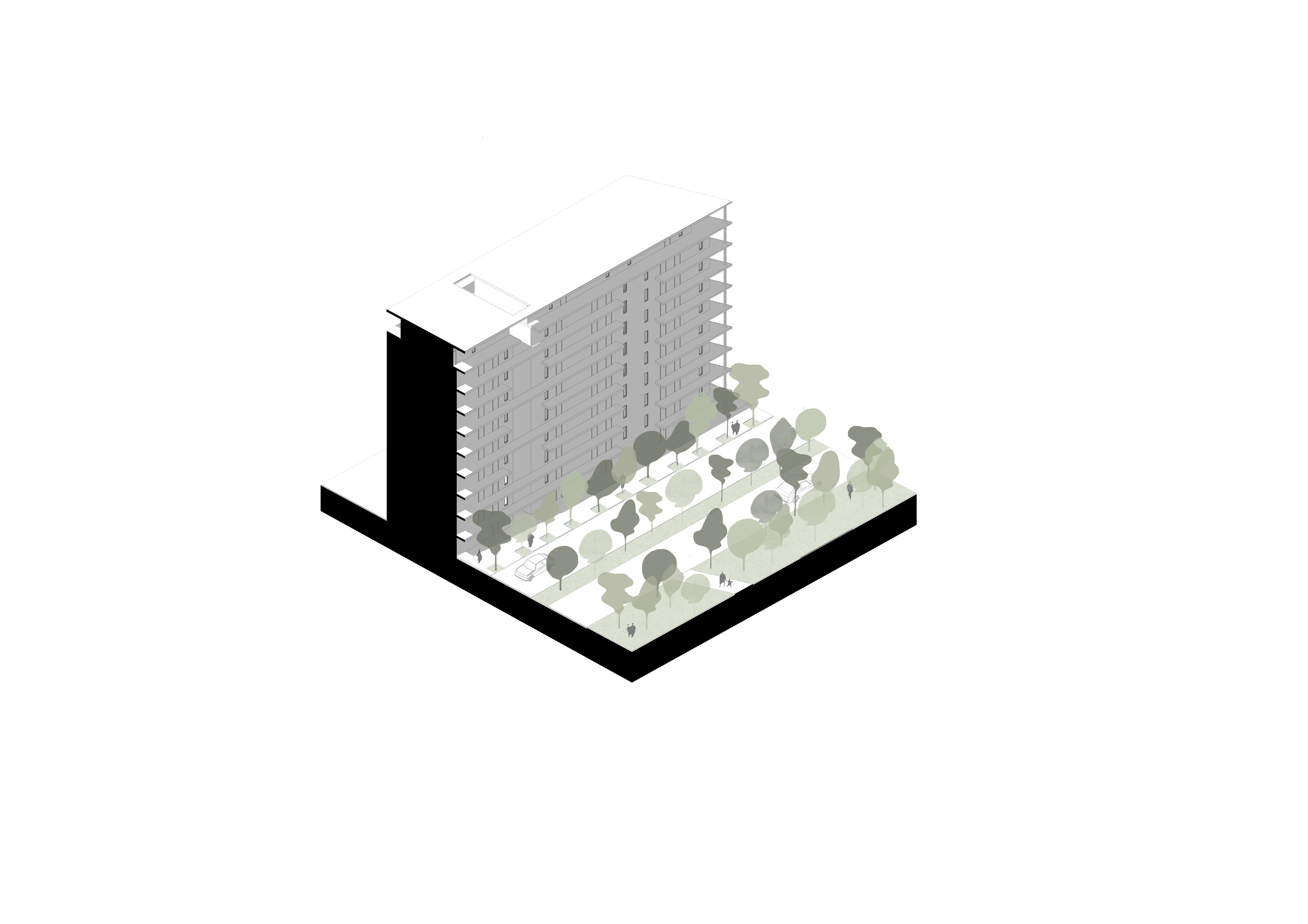
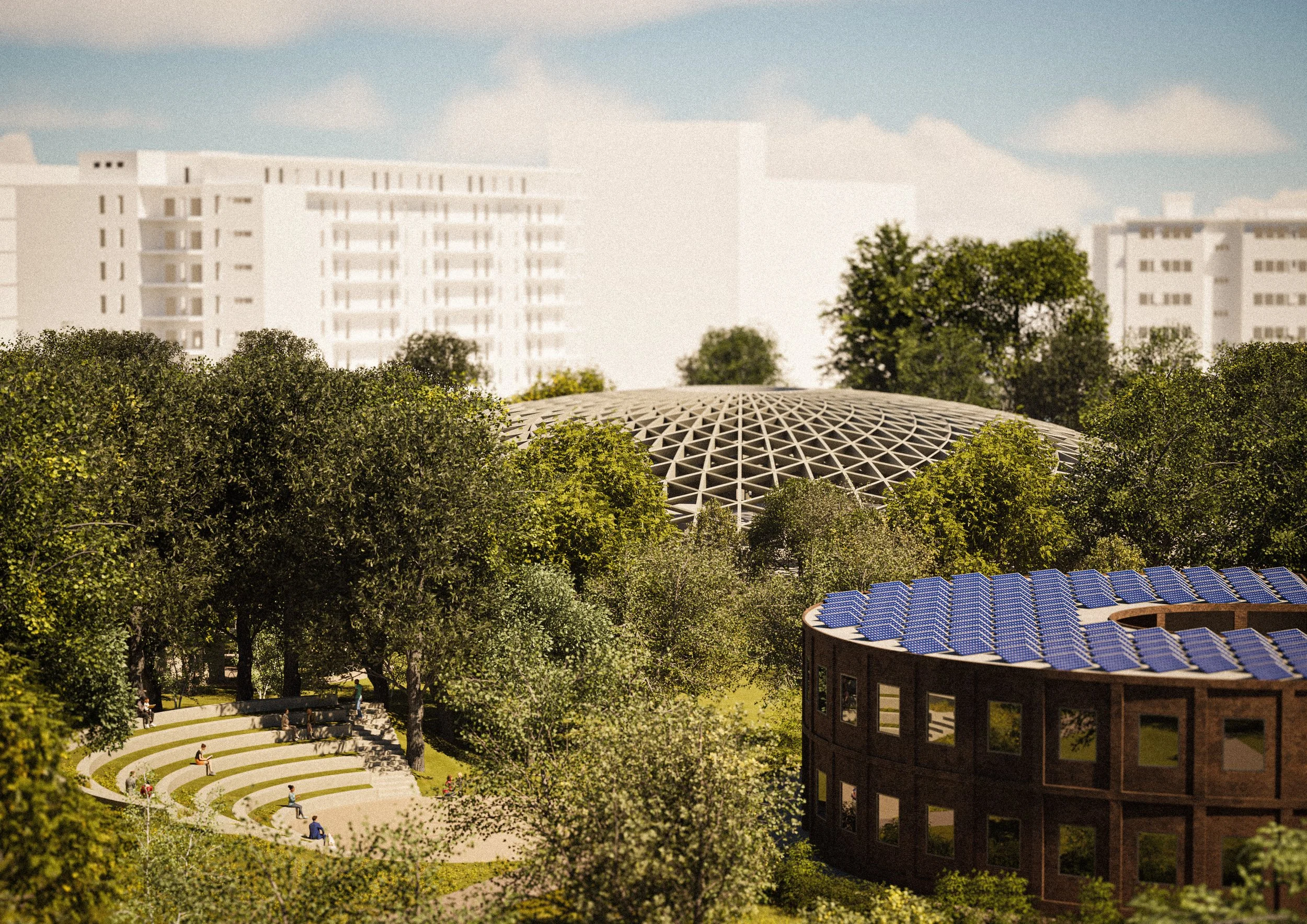
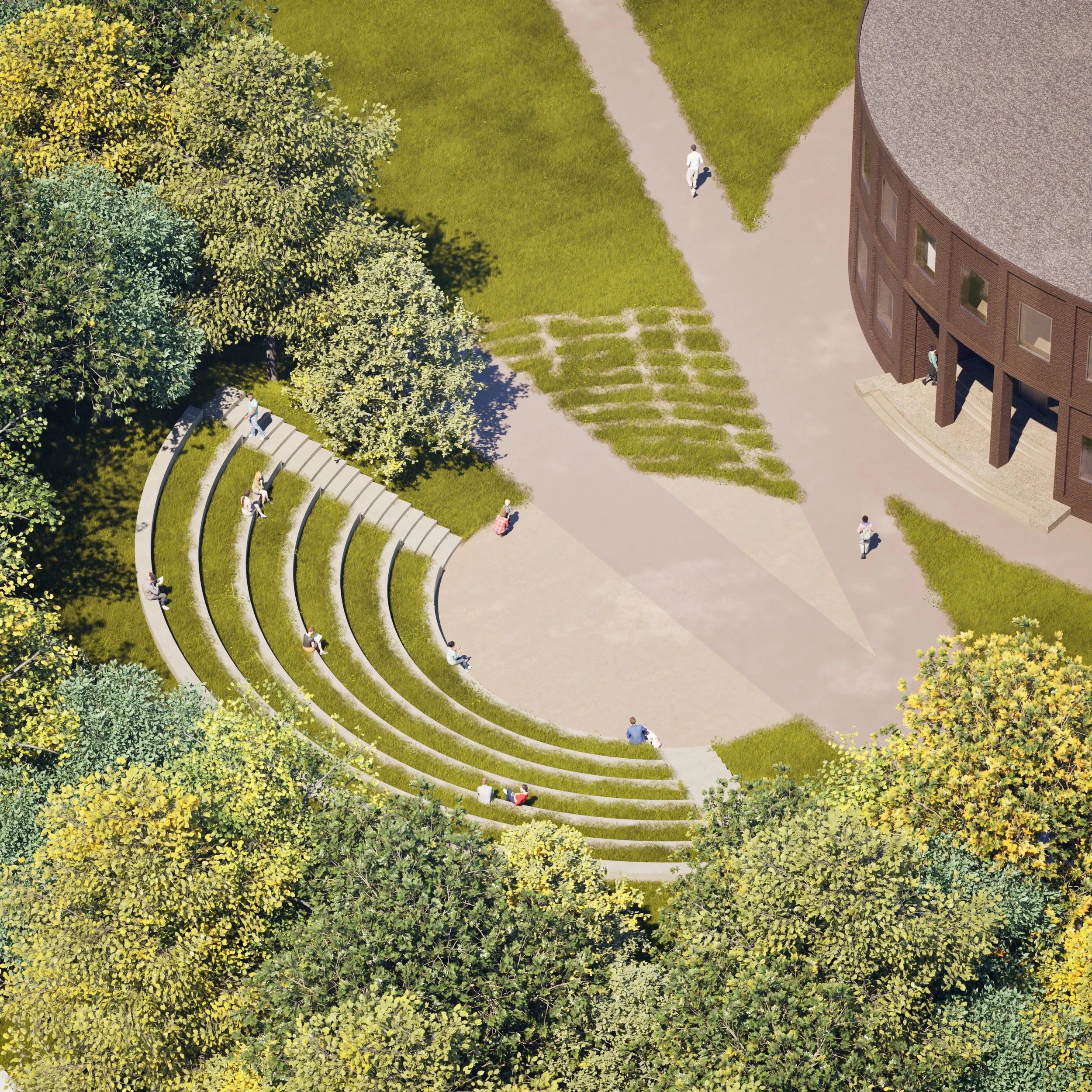
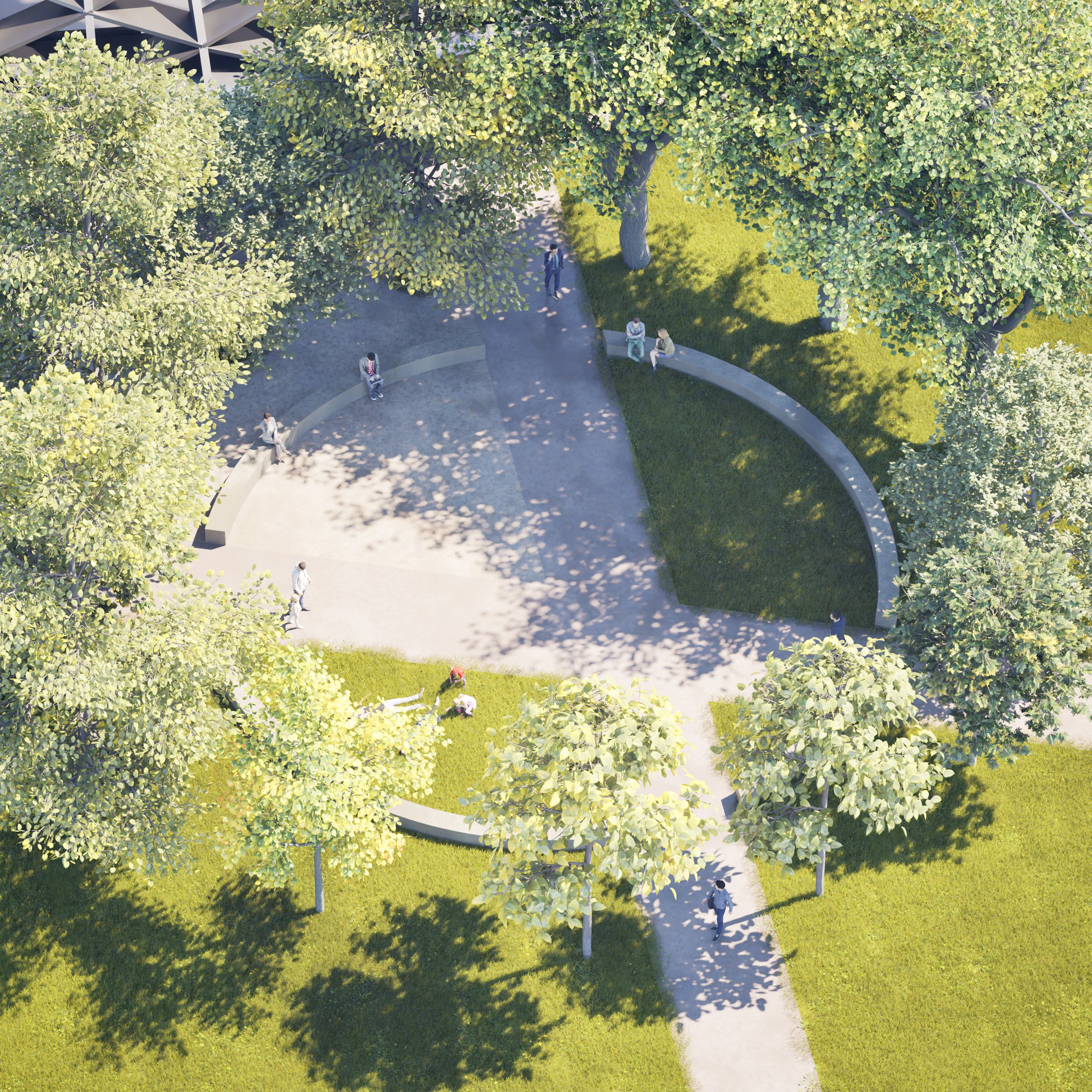
The park is conceived as a regenerative landscape strategy that reshapes the site’s morphology while reinforcing its ecological identity. Toward the Sky building, the ground gently rises into a new artificial hill, formed using the excavated soil from the underground auditorium. This operation not only minimizes material waste but also transforms a technical necessity into a spatial opportunity. The elevated topography becomes the foundation for an open-air amphitheater, a civic space for informal performances, gatherings, and everyday use, establishing a visual and physical dialogue between the cultural hub and its urban surroundings.
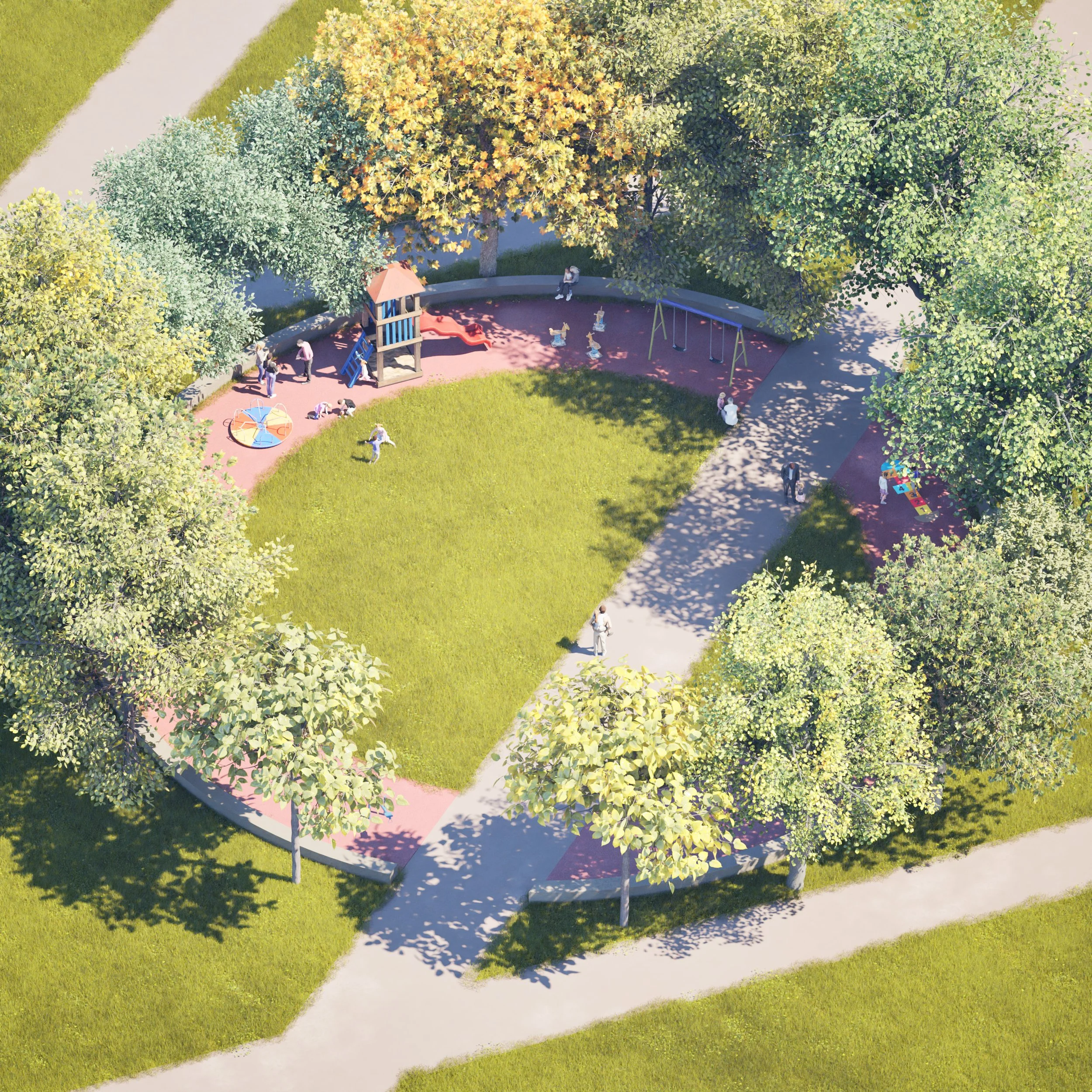
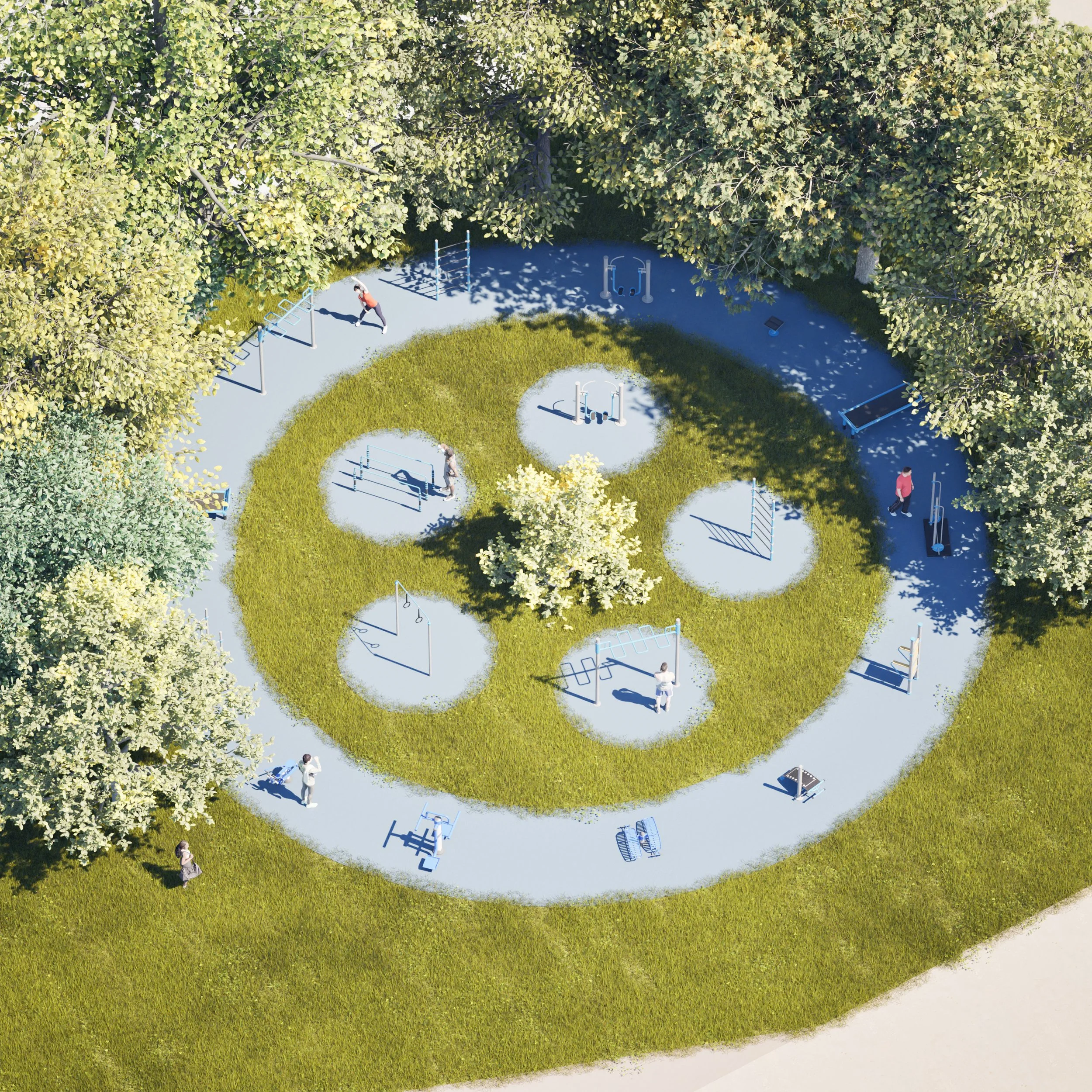
The landscape design is based exclusively on native Lombard species, selected to restore local biodiversity and strengthen ecological resilience. Oaks, elms, hornbeams, lindens, birches, and manna ashes recreate a layered forest structure capable of supporting pollinators, birds, and small fauna. By prioritizing autochthonous vegetation, the project aims to regenerate the natural life cycle within the site, fostering a self-sustaining ecosystem that evolves over time. The park is not conceived as a decorative green space, but as a living organism — a dynamic environment where architecture, soil, vegetation, and community become part of the same continuous cycle.
gate residential block
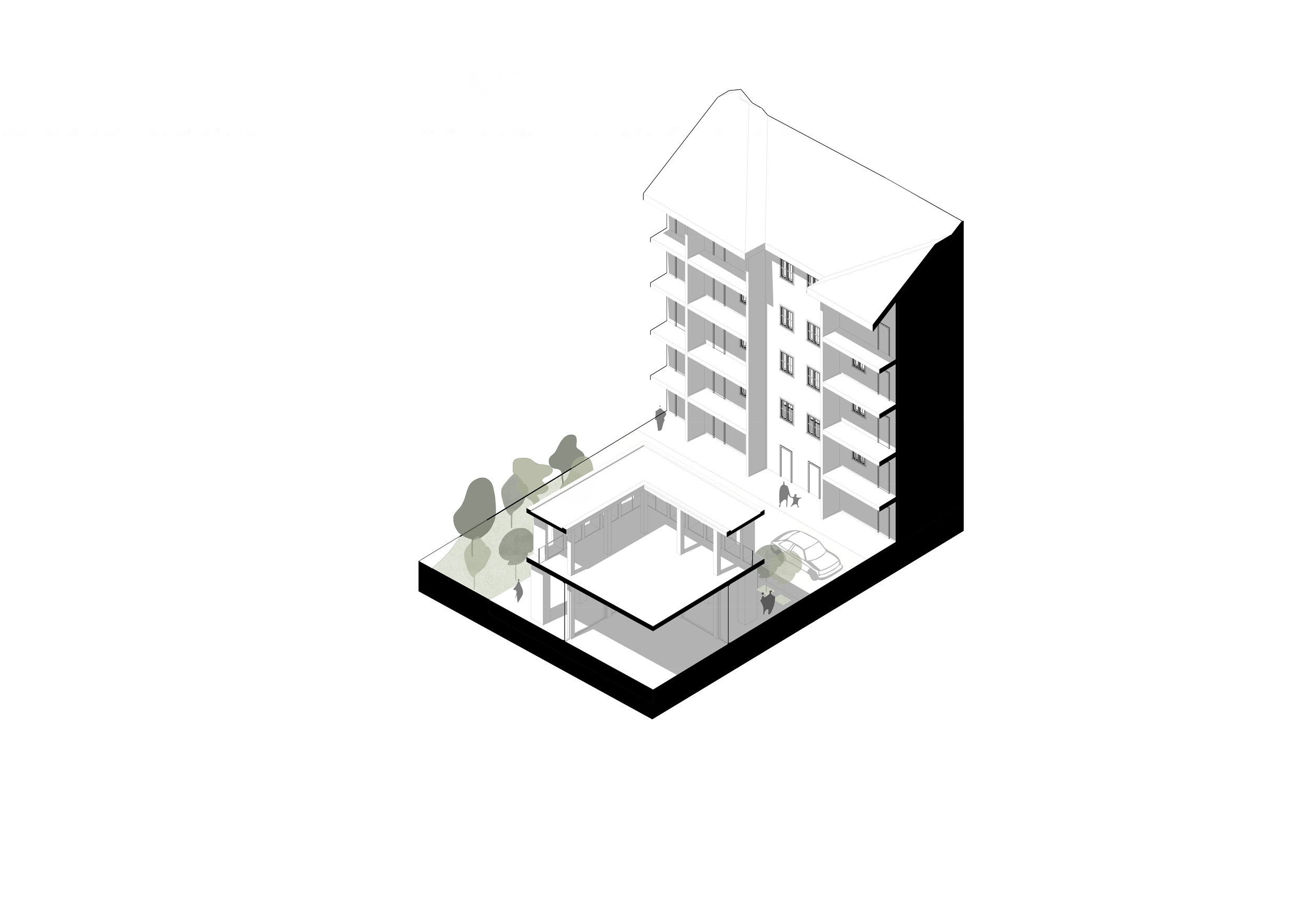
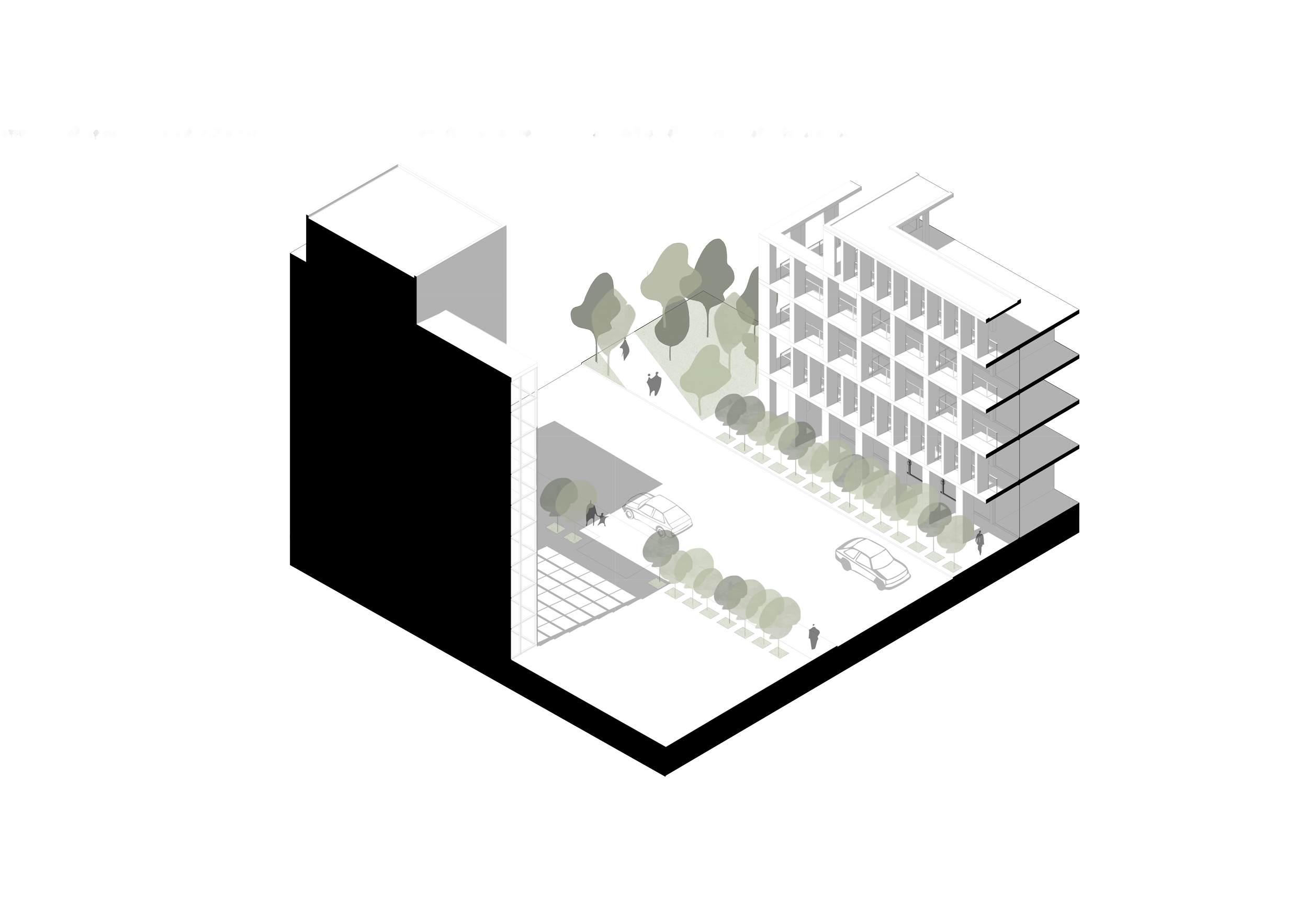
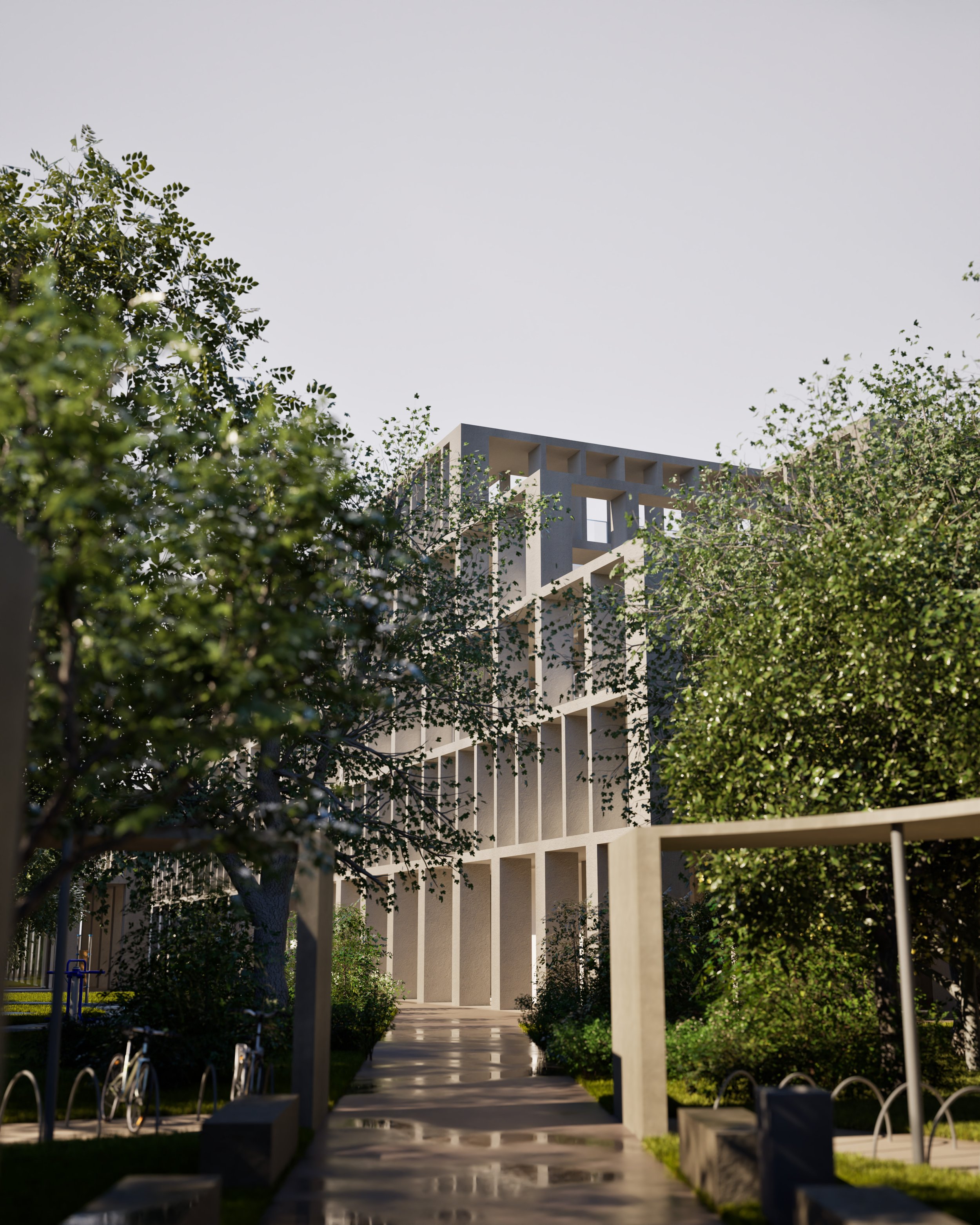
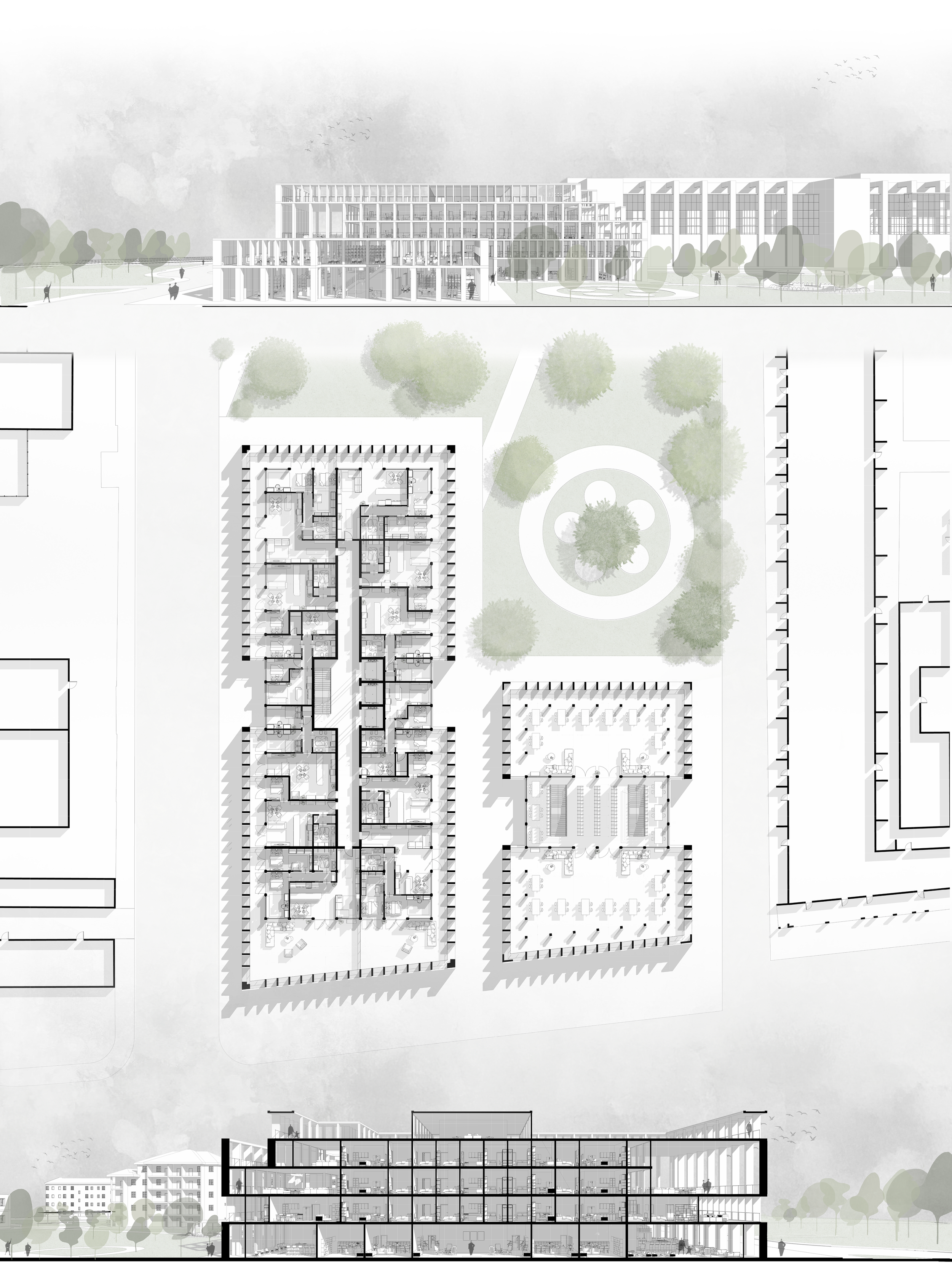
The residential gate block marks the southern boundary of the masterplan and plays a fundamental urban role: it is not simply a housing building, but a spatial and social threshold between the existing neighborhood and the new park. Positioned along the urban edge, it aligns with the oblique axes of the surrounding residential fabric, reinforcing continuity with the city while simultaneously framing the entrance to the Bosco della Musica. Together with the public library on the opposite side, it creates a new boulevard that acts as the main gateway to the green core of the project.
Conceived as a mixed-use structure, the building activates the ground level with commercial spaces, cafés, offices, and public-oriented functions, ensuring permeability and constant activity throughout the day. This strategy aims to generate economic vitality and increase perceived safety, transforming what was previously a marginal edge into a lively urban frontage. The upper levels accommodate a mix of private residences, student housing, and shared spaces, encouraging a diverse and intergenerational community closely connected to the cultural hub of the auditorium.
Architecturally, the volume mediates between city and landscape through a system of continuous terraces facing the park. Each floor steps back progressively, creating generous outdoor spaces that soften the building’s mass and establish a gradual transition toward the greenery. These terraces, along with accessible rooftops, are planted with the same native Lombard species used in the park, extending the ecological strategy vertically and reinforcing the idea of a continuous green system. In this way, the residential gate block becomes an inhabited filter — a vibrant, productive, and ecological interface that defines the entrance to the park while embodying the project’s broader dialogue between architecture, community, and nature.
urban strategy